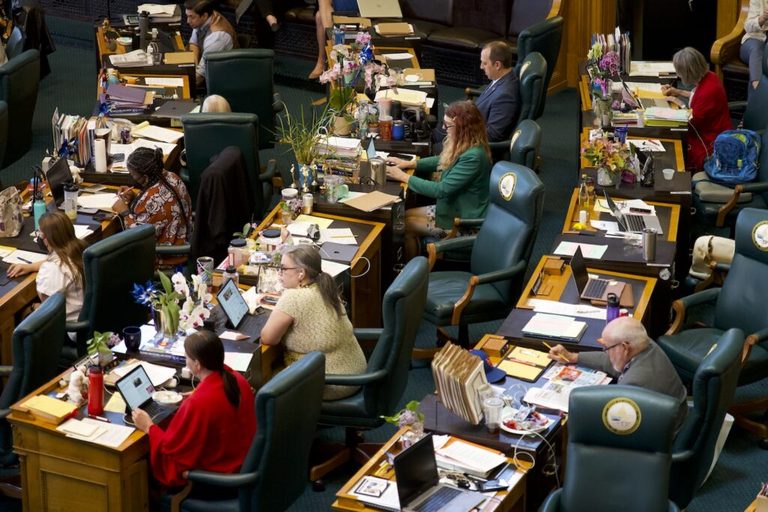
For the 2026 midterm elections, a record 3,824 women are seeking state legislative seats across 46 states, according to the Center for American Women and Politics at Rutgers University. Women now represent 35.5% of all state legislative candidates, up from the previous record of 3,621 in 2022.
National Landscape and Party Balance
While the overall number of women candidates is climbing, party affiliation remains heavily skewed. Of the women nominated this cycle, 68% are Democrats, and roughly 64% of women currently serving in state legislatures are Democrats as well. Debbie Walsh, director of the research center, warned that “our system is set up in many ways for this kind of slow, steady progress” and emphasized that gender equity will not be achieved in a single election.
Idaho Snapshot
In Idaho, women hold 29 of the 105 legislative seats. At least 70 women have qualified for the November ballot, reflecting the state’s growing, though still modest, representation of women in government.
Republican Recruitment Challenges
Republican officials acknowledge a recruitment shortfall. The Republican State Leadership Committee’s Right Leaders Network has fielded a class of 67 women running in a dozen states, but pollster Amanda Iovino notes that a “supermajority” mindset may be limiting outreach to new female and minority candidates. She predicts that GOP organizations will redouble their efforts in future cycles.
Experts also point to a cultural hurdle: many conservative women face pressure to avoid identity‑politics framing, which can deter them from seeking office. Nevertheless, the 2020 and 2022 elections set records for Republican women running for Congress and serving in state legislatures, suggesting a gradual upward trend.
Economic Messaging and Voter Appeal
Iovino argues that the current focus on affordability benefits women candidates, who often frame policy discussions around household budgets and grocery costs rather than abstract economic indicators. “When cost of living is the top issue, it will favor the people who instinctively talk to the cost side of the equation,” she said.
Individual Stories: Texas and Georgia
Former teacher Stefanie Bord is running for the Texas State House in a predominantly conservative Houston district. Bord, a Democrat, says women bring lived experience of managing homes and families to policy debates. She cites the 2022 Supreme Court decision overturning Roe v. Wade as a catalyst for increased political engagement among women.
In Georgia, a record 127 women are on the legislative ballot, with the political action committee Georgia WIN List endorsing 76 of them. Executive director Melita Easters notes that even long‑shot campaigns can energize voters who have felt underrepresented.
Looking Ahead
While the 2026 cycle mirrors the 2018 wave of women candidates, the overall trajectory remains incremental. The data show a nearly 40% increase in women serving in state legislatures over the past decade, yet representation varies widely—from over half the seats in Colorado, Nevada, and New Mexico to fewer than 15% in West Virginia, South Carolina, and Mississippi.
Both parties recognize that true gender equity will require women on both sides of the aisle. As Walsh put it, “If the goal is for there to be gender equity in these legislatures, it’s not going to happen by only electing Democratic women. The Republican Party has to do more.”
Original reporting: Idaho Education News — read the source article.