Ray Roberts Lake State Park’s Johnson Branch Unit sits about twenty minutes north of Denton on FM 3002, and on any given weekday morning the parking lot holds maybe a dozen cars — a mix of kayakers strapping down their boats and older couples with binoculars already raised before they’ve closed the car door.
The park covers roughly 1,500 acres on the eastern arm of Ray Roberts Lake, which itself stretches across nearly 30,000 surface acres. Johnson Branch is the quieter of the two main units; the Isle du Bois side, further west, draws more campers and motorboat traffic. Over here, things stay calmer. The water is wide and mostly still by mid-morning, and the shoreline trail winds through post oak and cedar elm before opening onto coves where great blue herons stand motionless in the shallows.
Birding is the real draw for a certain kind of regular visitor. The transition between cross-timbers woodland and open grassland makes the area productive during spring and fall migration. Painted buntings show up with some reliability in late spring. Scissor-tailed flycatchers work the fence lines along the entry road. The eBird checklist for this exact location runs to well over 200 species logged over time, which tells you something about the people who keep coming back.
Water access is straightforward. There’s a boat ramp, and the park rents kayaks and canoes on weekends through a concession — rates run around $15–$20 per hour. Paddling north along the shoreline past the swim beach puts you into quieter inlets within about twenty minutes. The water is warm from May through September, and the designated swim area has a sandy bottom and no current to worry about.
The campground has both developed sites with water and electric hookups and a walk-in primitive section. The primitive sites require about a quarter-mile carry-in and sit closer to the water’s edge — worth the extra effort for the view at sunrise. Sites range from roughly $20 to $30 per night depending on hookups, and the park reservation system through Texas Parks & Wildlife is the only reliable way to get a weekend spot from April through October.
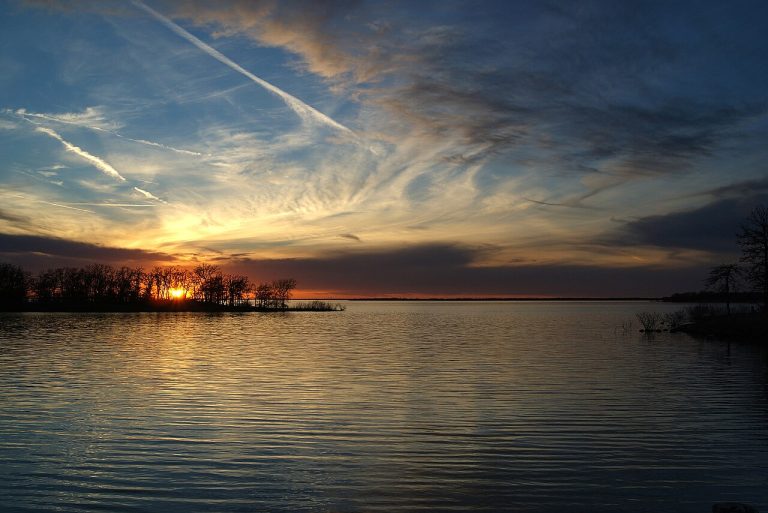
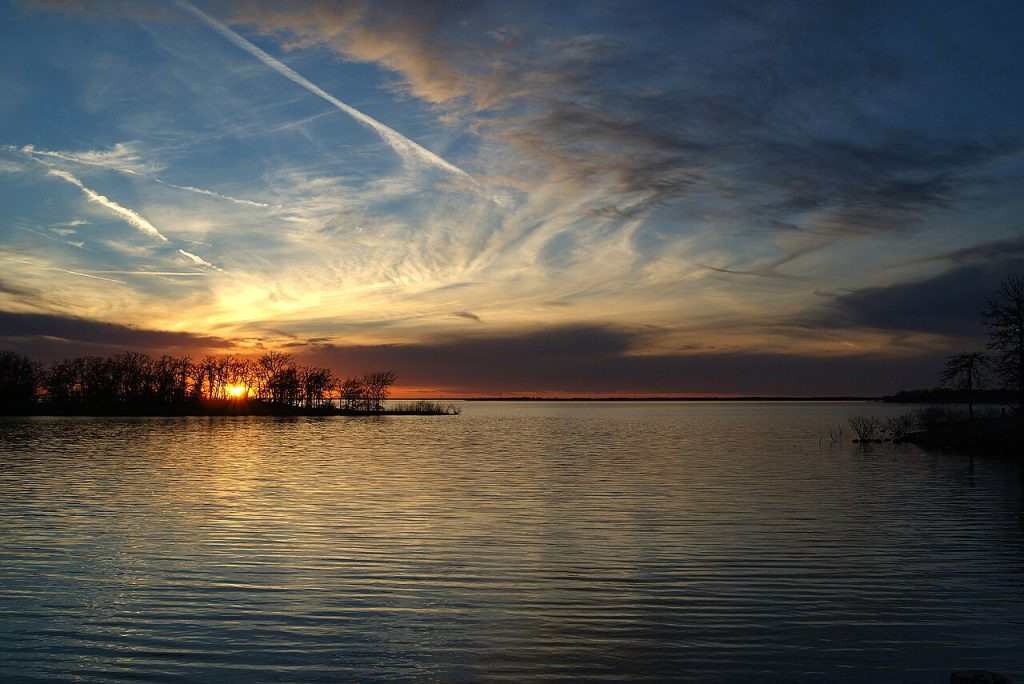
Day use entry is $7 per person, which covers access to the trails, swim area, and picnic facilities. The main loop trail runs about five miles and stays mostly flat, with enough tree cover to make a summer hike manageable before noon. Early fall is probably the best time to visit overall — the crowds thin after Labor Day, the temperatures drop enough to make an afternoon walk comfortable, and the light on the lake in late September has a quality that justifies the drive on its own.
None of this is dramatic. There’s no dramatic geology, no waterfall, nothing particularly Instagram-worthy in an obvious sense. What Johnson Branch offers is acreage, water, and a certain unhurried quality that’s increasingly hard to find within a half-hour of Denton. The regulars here — the kayakers, the birders, the families who’ve been booking the same campsite in October for years — seem to prefer that it stays exactly that way.