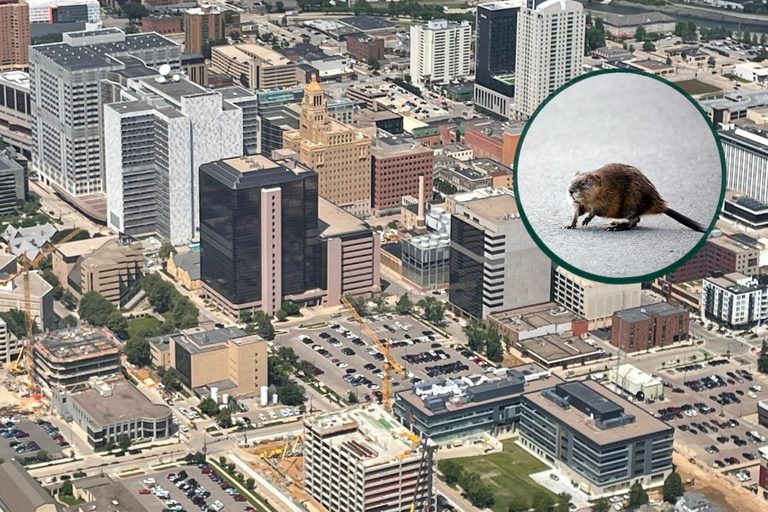
In April 2023, a resident of Rochester, Minnesota, reported an unexpected visitor to the city’s downtown core: a muskrat scurrying along the construction‑filled Discovery Walk on 2nd Avenue. While muskrats are abundant throughout the state’s marshes, ponds, and streams, sightings in the heart of Rochester’s “Med City” are virtually unheard of.
What the observer saw
The observer, an avid animal lover who has spent more than a decade working downtown, described the creature as a small, brown‑gray rodent about the size of a large rabbit, weighing roughly three to five pounds. After pausing near several rain‑filled landscaping features that were still under construction, the muskrat headed toward the nearby Zumbro River, presumably in search of its natural habitat.
Muskrats in Minnesota
According to the Minnesota Department of Natural Resources (DNR), muskrats are widespread across the state, thriving in wetlands, ponds, and streams that support abundant aquatic vegetation. A single wetland can support several hundred individuals, and the animals are known for building dome‑shaped lodges of mud and plant material, though they also dig burrows. Their size—typically three to five pounds—makes them smaller than their beaver cousins.
Why downtown sightings are unusual
Urban environments like downtown Rochester lack the water‑rich habitats muskrats depend on for food and shelter. The DNR notes that while the species is common in rural and suburban settings, it rarely ventures into densely built‑up areas. The brief appearance on a city street underscores how wildlife can occasionally intersect with human activity, especially when construction creates temporary water pools.
Local wildlife observations
The observer, who has witnessed a variety of city wildlife—including ducks, geese, crows, rabbits, squirrels, and chipmunks—said the muskrat was the first of its kind seen in the downtown district. No additional sightings have been reported since that day, making the 2023 encounter a memorable footnote in Rochester’s urban nature history.
What residents can do
For those interested in spotting local wildlife, the DNR recommends exploring the city’s parks, river corridors, and any remaining wetland pockets. Photographs and respectful observation help document these rare urban encounters without disturbing the animals. Residents are encouraged to share any future sightings with local wildlife groups or the DNR to improve understanding of how wildlife adapts to the city’s evolving landscape.
Looking ahead
As Rochester continues to develop, temporary water features may occasionally attract wildlife not typically seen in the downtown area. While the muskrat’s visit was brief, it serves as a reminder of the natural world’s resilience and the importance of preserving green spaces even within urban settings.
Original reporting: News Talk 1340 KROC-AM – News and Talk – Rochester News Radio — read the source article.