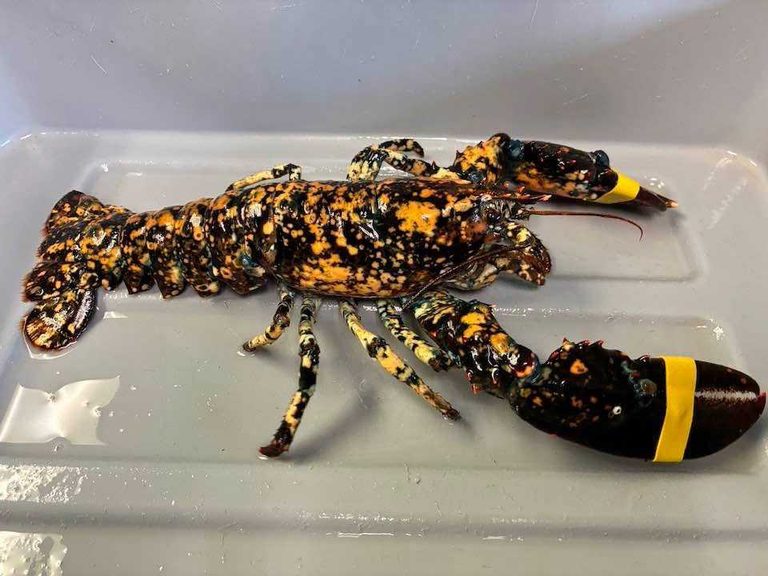
On October 27, a fisherman operating out of David’s Fish Market in Salisbury, Massachusetts, hauled in a truly rare specimen of the American lobster. The creature, caught off the coast of Plum Island, displayed a striking Halloween‑inspired palette of yellow‑orange, black, and mottled yellow shells.
What makes the lobster unique
Calico lobsters are not a separate species; they are a color variant of the common American lobster (Homarus americanus). Their unusual pigment pattern results from a genetic mutation that produces mottled orange, black, and yellow markings. Experts estimate that the particular coloration seen on this lobster occurs roughly once in every 30 million lobsters, making it an extraordinary find for both scientists and seafood enthusiasts.
Local fisherman shares the discovery
Adam Fuller, the owner of David’s Fish Market, posted photographs of the lobster on social media, noting that it was the first such specimen he had ever encountered. “It’s a 1‑in‑30‑million coloring and the first that I’ve ever seen,” Fuller wrote. He added that a customer purchased the lobster with the intention of returning it to the ocean, underscoring a growing respect among locals for preserving unique marine life.
Why the find matters to the community
While the lobster’s vivid appearance makes it a curiosity for anglers and beachgoers, the discovery also serves as a reminder of the biodiversity that thrives along Massachusetts’ coastline. The region’s fishing heritage is deeply intertwined with family‑run markets like David’s, which have long been gathering places for residents and visitors alike. Stories such as this reinforce the connection between the community and the sea, encouraging stewardship of the local marine environment.
Scientific perspective
Marine biologists explain that calico lobsters result from a rare genetic variation that affects the distribution of pigments in the exoskeleton. The coloration does not affect the lobster’s health, growth, or taste, but it does make the animal a subject of interest for research on genetic diversity in crustaceans. Such rare variants can provide insight into the mechanisms of pigment expression and may help scientists monitor the health of lobster populations.
What’s next for the lobster
According to Fuller, the lobster will be released back into the ocean as soon as possible, allowing it to continue its life in the wild. The fisherman hopes that the story will inspire others to appreciate the unique creatures that inhabit the Atlantic waters off New England.
For readers interested in learning more about local marine life, the Massachusetts Department of Marine Fisheries offers resources on sustainable fishing practices and ways to report unusual catches.
Original reporting: WESH Orlando — read the source article.