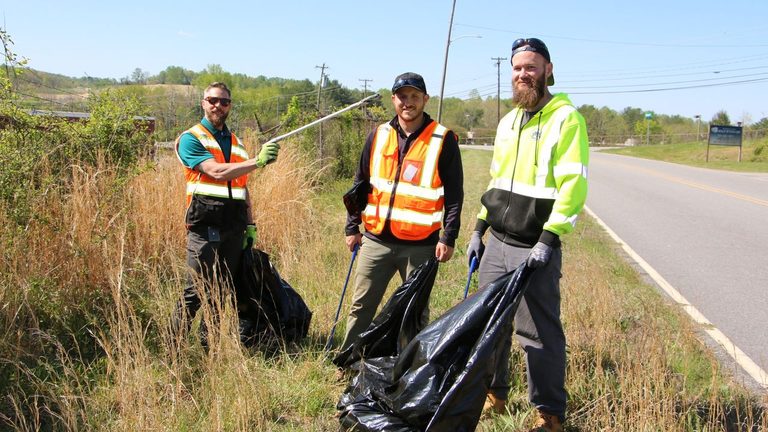
Residents of the Triangle have voiced growing frustration over litter littering sidewalks, woods and waterways. While the problem’s exact trend remains unclear, a local nonprofit is making a tangible impact. The Great Raleigh Cleanup, founded in 2020 by Preston Ross, reports that its volunteers and paid crews have removed more than 500,000 pounds of trash from Raleigh’s streets, parks, parking lots and waterways.
Community‑driven cleanup effort
What began as a handful of bags collected by Ross and a friend has grown into a city‑partnered operation that runs both volunteer cleanups and a paid‑workforce program. The program employs people experiencing homelessness, recent incarceration or other hardships, offering them a steady paycheck and a pathway to stable housing.
Since its inception three years ago, 112 participants have cycled through the workforce program. One worker, Webb, says the job not only provides income but also teaches his son the value of caring for the environment. “I have to be a good role model for him,” Webb explained.
City support and funding
Raleigh’s municipal government backs the effort by providing a modest annual contribution of under $4,000 to cover disposal costs for the nonprofit’s crews. In contrast, Wake County’s Solid Waste Division contracts a private firm to clean roughly 140 miles of road for about $50,000 each year, cleaning each segment two to four times annually. County officials note that the amount of trash collected by the contractor has been declining, though they cannot say whether roads are cleaner or the debris is simply lighter.
According to county spokesperson Marcus Thompson, The Great Raleigh Cleanup’s crews collect roughly twenty times the weight of trash that the private contractor does, though the two programs serve different purposes and cannot be directly compared on cost or effectiveness.
Challenges and future plans
Ross acknowledges that litter removal is an ongoing battle. “Areas that for a very long time had no litter now have litter,” he said, noting that crews often return to the same spots because new debris accumulates quickly after a cleanup.
To curb the cycle, Ross advocates for a combination of public education, more trash receptacles, and regular maintenance of those containers. He also points to successful public‑awareness campaigns such as Texas’ “Don’t Mess with Texas” as models for encouraging responsible behavior.
Resident concerns
Long‑time resident Heike Meissner, who has walked the same neighborhoods for over two decades, says the litter she photographs – from candy wrappers to discarded electronics – feels like “little landfills everywhere.” She worries about the impact on streams and wildlife, calling the trend “a disrespect for nature, for the animals and for other people.” Meissner urges both local governments and individuals to take responsibility, noting that a simple act like tossing a cup out a car window “does impact somebody.”
How to get involved
Residents can report litter sightings to the North Carolina Department of Transportation or their municipality, and many neighborhoods organize their own clean‑up events with supplies provided by Wake County. The Great Raleigh Cleanup continues to welcome volunteers and donors who want to help keep the Triangle beautiful while supporting vulnerable community members.
Original reporting: WRAL Raleigh — read the source article.