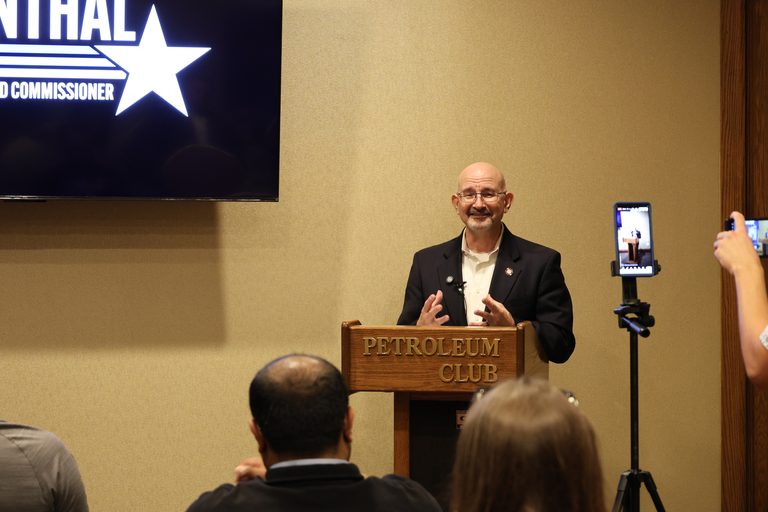
Midland, Texas – In his inaugural press briefing as Texas Railroad Commissioner‑elect, Jon Rosenthal set out an ambitious agenda aimed at strengthening the state’s energy infrastructure while supporting the agency’s 1,100‑person workforce. The former four‑term Cypress legislator and longtime oil‑field engineer said his top priorities include doubling the Railroad Commission’s roughly half‑billion‑dollar budget, increasing employee pay, and streamlining permitting for responsible operators.
Budget and staffing focus
Rosenthal told reporters that a larger budget will allow the commission to modernize its operations and improve transparency. He stressed that any increase must be balanced with fiscal responsibility, noting that the agency’s current funding already supports critical safety and environmental oversight. “My goal is to help this commission be more effective and transparent,” he said, adding that higher wages will attract and retain skilled workers essential to Texas’s energy sector.
Orphan well cleanup
One of the most pressing challenges Rosenthal highlighted is the remediation of orphan oil and gas wells—sites abandoned with no clear owner. He pledged to make the process of plugging these wells less costly and faster, arguing that most operators want to act responsibly and protect the environment while remaining profitable. “I personally believe most of our operators want to do the right thing and want to play by the rules,” Rosenthal said, urging major operators to join the effort.
Bipartisan transition team
Demonstrating a commitment to bipartisanship, Rosenthal announced a transition team that includes former Republican Railroad Commissioner Barry Smitherman. Sitting Commissioner Jim Wright, who will serve until Rosenthal assumes office in January, will act as an advisor during the handover. This collaborative approach reflects Rosenthal’s broader message of putting Texans first and responsibly managing the state’s energy resources.
Economic impact
The Permian Basin, where Midland sits, supplied nearly half of the nation’s oil last year. By bolstering the Railroad Commission’s capacity, Rosenthal argues the state can sustain its role as the backbone of the Texas economy and the driver of the so‑called Texas miracle. He emphasized that a stronger commission will help keep the state’s infrastructure robust, supporting jobs and families across the region.
Looking ahead
Rosenthal’s agenda arrives after a hard‑fought election in which he defeated Republican Bo French despite being outspent. While his opponent framed the race around culture‑war issues, Rosenthal kept the focus on the practical responsibilities of the Railroad Commission. As the first Democratic commissioner in more than three decades, he says his administration will prioritize transparency, efficiency, and cooperation with industry to safeguard Texas’s energy future.
Original reporting: Texas Tribune (HLL/CB) — read the source article.