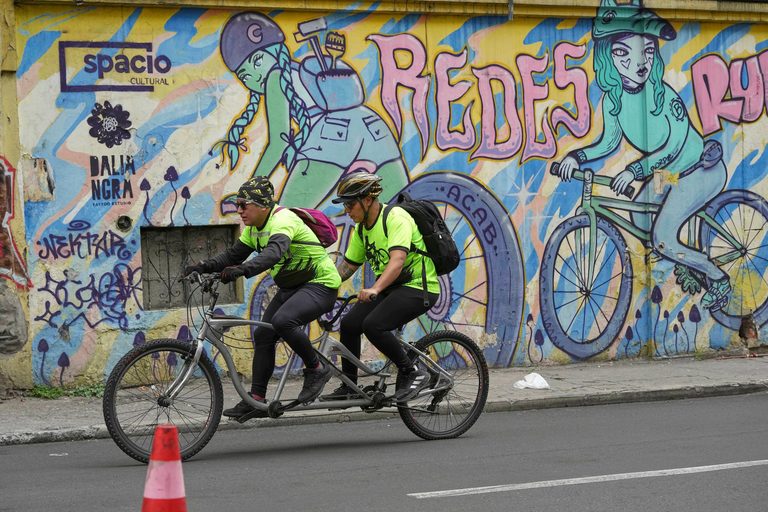
In Quito, Ecuador, a group of volunteers is turning the city’s streets into a place of freedom for the visually impaired. The nonprofit Ciegocleta meets each Sunday to ride tandem bicycles—steered by sighted guides while blind riders provide the power. Founded 19 years ago by local resident Miguel Ramos, the club now counts about 150 members, though only around 30 ride on any given Sunday.
From Family Rides to National Adventures
Ramos originally built his own tandems to ride the city’s weekly ciclopaseo, a car‑free event that opens avenues to cyclists and joggers. When one of his children could not join, he invited a blind neighbor, sparking a movement that has grown into a vibrant community of riders and guides.
One of the club’s most active members, 44‑year‑old Franklin Ochoa, lost his eyesight 16 years ago. He says the rides have opened a world of new experiences, even completing a 1,000‑kilometre (620‑mile) tandem trek across much of Ecuador. “When I arrive on a bike in a new city I feel like shedding tears of happiness,” Ochoa said. He now plans a multi‑month ride from Ecuador to Mexico, with a fellow club member ready to join him.
Building Confidence and Community
Before each ride, blind participants receive safety briefings, and guides practice riding with their eyes covered to understand the perspective of their partners. Volunteers like José Paéz, who joined after his father‑in‑law lost his sight, note that leading a blind rider can be challenging but rewarding. “Keeping a tandem bike balanced and sustaining the rhythm is not as easy as when you use a regular bike,” Paéz explained.
Long‑time member Ximena Lozano, a 54‑year‑old psychologist born without sight, says the club has given her a reason to be outdoors after years of staying home. “It lets me experience freedom,” she said, highlighting the social and emotional benefits of the program.
Impact on Inclusion
According to Ecuador’s government, roughly 56,000 people in the country are visually impaired. While employment opportunities for blind Ecuadorians have improved, participation in sports and recreation remains limited. Ciegocleta’s inclusive model demonstrates how community‑driven initiatives can bridge that gap, offering a safe, supportive environment for blind cyclists of all ages.
The club also expands beyond tandems, sometimes using three‑ or four‑seat bicycles to accommodate larger groups. By turning public streets into shared spaces for all abilities, Ciegocleta embodies the city’s commitment to true inclusion.
Original reporting: Alexandria, VA News – WTOP News — read the source article.