Questa, N.M. – A 2009 conservation easement that opponents hoped would halt Kit Carson Electric Co‑op’s hydrogen project has been shown by recent court filings not to restrict development on the 242‑acre parcel leased from Chevron Mining. The easement applies only to other sections of the former mine’s Superfund site.
Legal clarification clears the way
Federal filings reveal that the U.S. Department of Agriculture, listed as a defendant, filed a response on Nov. 2 stating the easement does not cover the area set aside for the hydrogen project and solar array. Plaintiffs’ counsel later issued an apology for misreading the easement’s terms.
U.S. District Court Judge David H. Urias rejected a request for a temporary restraining order in August and is still considering a preliminary injunction. Until a ruling is issued, construction of the solar array and hydrogen storage plant proceeds.
Local officials explain the impact
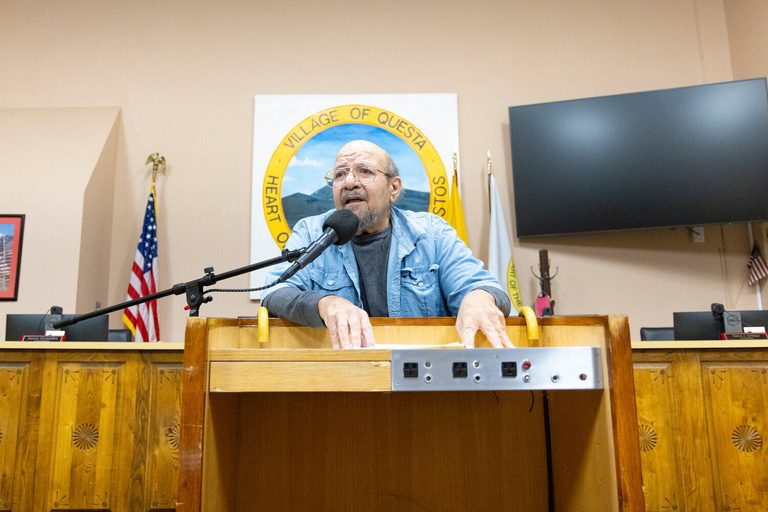
During a Village of Questa Council meeting on Nov. 10, Village Attorney Marcus J. Rael, Jr. presented the distinction between the easement and a separate declaration of restrictive covenants that does limit certain activities on the tailings facility. Rael emphasized that the covenants permit “light industry (including renewable energy projects)” and that the hydrogen project falls under that category.
Rael also highlighted potential benefits to the community, including revenue from power generation, reduced greenhouse‑gas emissions, and greater local control over energy resources. When a council member asked about a slide listing negative impacts, Rael replied, “I’m not here to stump for this project, I’m here to give the council the facts.”
Opposition and community concerns
Two local acequias – the Cabresto Lake Irrigation Community Ditch Association and the Acequia Madre del Cerro de Guadalupe – filed the federal lawsuit seeking an injunction until further environmental review. Their attorney, Guy Dicharry, argues that hydrogen production constitutes “heavy industrial use” inconsistent with the restrictive covenants.
Kit Carson Electric Co‑op CEO Luis Reyes called the original easement filing a “misinformation campaign” and suggested the plaintiffs were “from out of town, trying to dictate local policy.” Residents voiced strong feelings at the council meeting, with long‑time citizen Juan Montes describing remarks that outsiders were less entitled to speak as “hate speech” and invoking the First Amendment and Christian principles of equality.
Environmental context
The project sits within the boundaries of the former Chevron Questa Mine Superfund Site, which is undergoing EPA‑mandated remediation after decades of molybdenum mining left widespread contamination. The hydrogen plant plans to draw groundwater from an existing Chevron well, a point contested by plaintiffs who say the covenants restrict water use to closure or reclamation activities only.
Rael argued that reusing the tailings facility qualifies as reclamation under CERCLA, allowing water use for hydrogen production. He also cited the EPA’s RE‑Powering America’s Land Initiative, which encourages renewable‑energy development on former mine lands.
Next steps
The federal court’s pending decision on a preliminary injunction will determine whether construction can continue uninterrupted or must pause for additional review. Meanwhile, the Village of Questa Council will continue to monitor the project’s compliance with the restrictive covenants and address community concerns.
Original reporting: Taos News — read the source article.