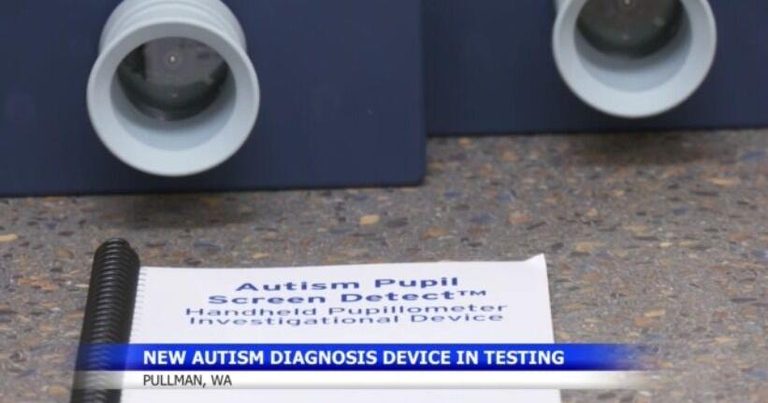
Pullman, Wash. — This week marked the start of a clinical trial at Schweitzer Engineering Laboratories (SEL) to evaluate a new screening device designed to detect early signs of autism in young children. The trial, which will run through April 2027, reflects the American Academy of Pediatrics’ recommendation that developmental screening occur between 18 and 24 months.
How the device works
Principal scientist Georgina Lynch explained that the device uses a light stimulus directed into a child’s eye. The reflexive constriction of the pupil, driven by cranial nerves in the brainstem, is captured at 80 frames per second, producing 400 frames per recording. By measuring this autonomic response, the system provides data that can help primary‑care providers decide which children should be referred for further evaluation.
“The lights will be dim, they’ll sit on a parent’s lap or in a small cube chair, and a nurse will deliver this test and basically they’ll bring the device to the eye,” Lynch said. She noted that a multidisciplinary team of hardware, software, mechanical, UI and UX engineers—ranging from eight to ten core members up to a few thousand contributors—has built the technology.
Why early screening matters
Dr. Keith Gautreaux, who is overseeing the trial, emphasized the potential impact on families. “This can help primary‑care providers know which children to send on for additional testing, so they get diagnosed earlier and can receive early behavioral intervention,” he said. Currently, the average autism diagnosis occurs between four and six years of age; the trial hopes to shorten that timeline.
Families participating in the study do not pay any fees and are the only ones who will receive their child’s results. SEL is also recruiting families with typically developing children to create a comparison group that could improve the tool’s accuracy.
Trial scope and enrollment
SEL plans to test up to 330 children ages two through four years, 11 months. Enrollment is open to families in Pullman and surrounding areas, including Moscow, Lewiston and potentially Spokane. The device is intended to be part of a comprehensive diagnostic workup, not a standalone diagnostic tool, and it uses a different method than eye‑tracking devices currently on the market.
“We’re super excited about the device to be able to test it and prove out its utility within primary care,” Dr. Gautreaux added.
What’s next?
The trial will continue through spring 2027, with results expected to inform how primary‑care practices across the region might incorporate the technology. If successful, the device could become a standard part of early‑childhood well‑child visits, giving families faster access to the services they need.
Original reporting: KHQ Spokane (news) — read the source article.