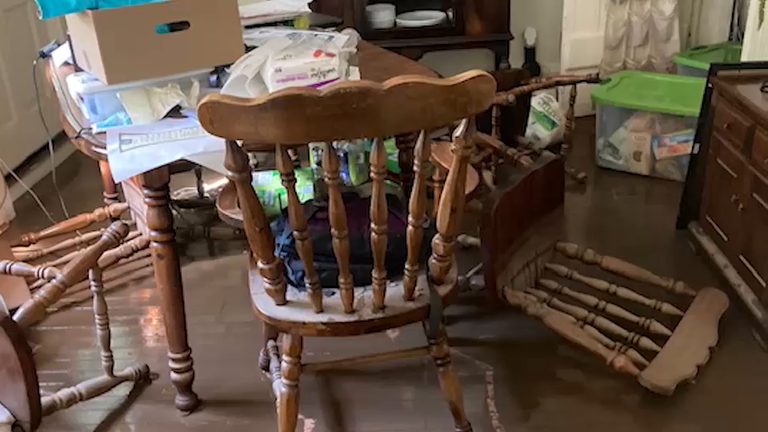
Princeton, N.J. – More than five years after Hurricane Ida flooded the Tri‑State area, a local mother is still trapped in a limbo of red tape and unfinished repairs. Annarella Valdivia bought her dream home on March 1, 2021, only to see floodwaters rise up to 48 inches and destroy the interior and all of her belongings.
Valdivia applied for assistance through the Homeowner Assistance and Recovery Program (HARP), a state‑run initiative funded with federal dollars to help Ida victims rebuild. She was approved for a reconstruction grant of at least $300,000, but the money has not yet been released.
Historic designation slows progress
A portion of Valdivia’s property includes the historic Stony Brook Toll House, which requires separate approval from the town’s historic preservation committee. The Department of Community Affairs (DCA) asked for documentation, which Valdivia provided, and she received a letter of acknowledgment in December 2025. Yet the state has not moved forward with the rebuild.
Financial strain and looming foreclosure
While the mortgage remains in force, Valdivia’s bank placed the home in foreclosure before the HARP grant was disbursed. The bank now offers a loan modification, but state rental assistance has ended, leaving Valdivia to pay both rent and mortgage. New Jersey law bars banks from foreclosing on homeowners enrolled in HARP, but those protections apply only to conventional loans, which Valdivia does not have.
“Why have a program to help disaster victims that are already traumatized to further add stress and traumatize them?” Valdivia asked, noting her children’s repeated question, “When are we going home?”
Program statistics show broader backlog
Since the program’s inception, 2,254 applications were filed; 577 were deemed ineligible and about a thousand of the remaining applicants withdrew. As of September 28, 2026, DCA reported 573 active HARP applicants. Of those, 315 have received a grant, 76 are in the process of receiving one, and 267 (47 %) are under construction. Only 48 homes (8 %) have been completed, while 258 applicants (45 %) remain in the same waiting position as Valdivia.
Advocates call for faster funding and state solutions
Amanda Devecka‑Rinear, director of the New Jersey Resource Project and the New Jersey Organizing Project, said many disaster survivors must “fight their way through” the system. She urged Congress to release HARP funding promptly and suggested New Jersey develop its own disaster‑relief programs rather than rely solely on federal assistance.
In a lengthy response, DCA acknowledged that historic‑preservation requirements can significantly extend project timelines and that the agency lacks a separate state funding source to bridge the gap. The department said it is closely monitoring proposed changes that could expedite future projects.
What’s next for Valdivia?
Valdivia is now seeking a variance from the Municipality of Princeton that would allow her to place a trailer or RV on the property while reconstruction stalls. The request has encountered additional delays, adding to her sense of revictimization.
“It’s worse than the actual flood. It’s worse than actually being a hurricane victim. Now, it’s like revictimization,” she said.
Local officials and advocacy groups continue to press state leaders for clearer timelines, additional funding, and streamlined processes to ensure that families like Valdivia’s can finally return home.
Original reporting: Brookhaven News – ABC7 New York — read the source article.