Saudi officials announced Monday that a formal probe is under way to determine why the kingdom’s air‑defense network failed to intercept a coordinated missile and drone assault launched by Iran‑backed Houthi rebels. The attack struck Riyadh’s King Khalid International Airport, killing at least 13 people and injuring more than 300.
Investigation focuses on early warning and interceptor performance
Anonymous Saudi sources said the initial findings indicate the Houthis first deployed multiple drones to clear a path for a mix of cruise and ballistic missiles. The missiles, equipped with maneuverable warheads, are designed to challenge Patriot interceptors and other systems currently used by Saudi forces. One official added that the inquiry will also examine why the air‑defense network did not issue an earlier warning, despite the weapons traveling over 1,000 kilometers to reach the capital.
U.S. leadership considers direct action
President Trump told reporters on Saturday that the United States is reviewing the possibility of conducting its own strikes against Houthi targets. While Washington has already provided intelligence sharing, target identification and planning assistance for the Saudi‑led coalition, it has so far refrained from executing kinetic attacks itself.
Trump’s remarks come as the United States approaches midterm elections, a period that could shape the balance of power in Congress. Critics warn that deeper U.S. involvement could inflame anti‑American sentiment, especially as inflation and high fuel costs—partly driven by ongoing conflict in the region—continue to burden American families.
Regional implications and ongoing conflict
The Houthi assault follows a recent Saudi strike on Yemen’s capital, Sanaa, which killed one civilian and wounded 12. The rebels have also seized key positions along the Bab el‑Mandeb Strait, threatening a vital shipping lane that funnels oil from the Persian Gulf to global markets.
U.S. officials have warned that a broader American response could prompt the Houthis to disrupt traffic through the Bab el‑Mandeb, further tightening the flow of Middle‑East oil already strained by Iranian attempts to choke the Strait of Hormuz.
Economic and diplomatic context
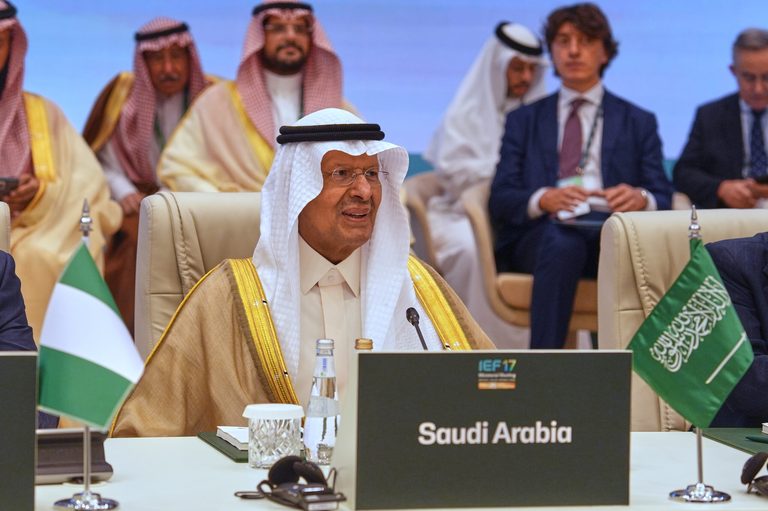
Despite the security crisis, Riyadh continued with the second day of the World Petroleum Congress, drawing more than 70 ministers and over 300 senior executives from international energy organizations. An Emirati diplomat called for joint Gulf action to defend the region against Iranian‑aligned attacks, emphasizing the shared security interests of Gulf states.
Iran’s foreign ministry expressed “severe concern” over the fighting and offered its “good offices” to facilitate diplomatic talks between Saudi Arabia and the Houthis, though no concrete steps have been announced.
U.S. officials’ perspective
Former Secretary of State Mike Pompeo, speaking at a conference in Abu Dhabi, described the Houthi strike as evidence that the United States has not yet achieved deterrence against Iran and its proxies. He urged a decisive approach, stating, “You have to crush the Iranian regime, period, full stop.”
The Saudi investigation is expected to produce a detailed report in the coming weeks, which will inform both Riyadh’s future defense upgrades and any potential escalation of U.S. military involvement.
Original reporting: Alexandria, VA News – WTOP News — read the source article.