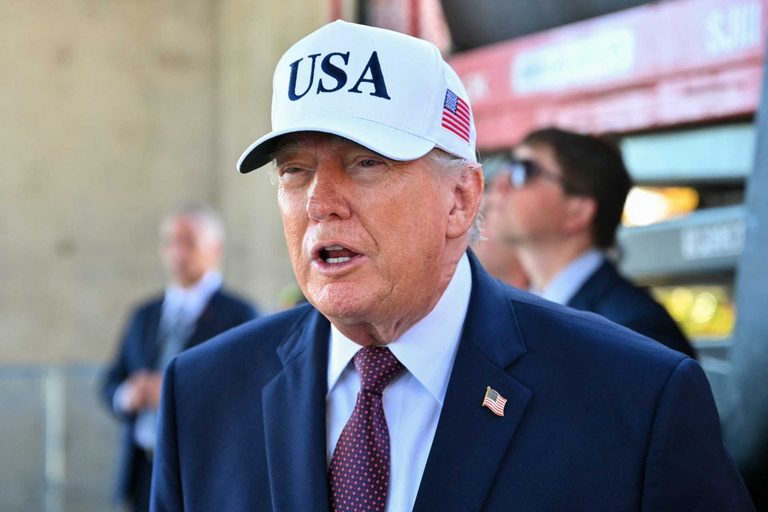
As the new 118th Congress prepares to convene in early January 2027, Democrats have secured majorities in both the House of Representatives and the Senate. In response, President Trump announced on Truth Social that he will rely on the constitutional veto power to block legislation he deems contrary to American values and the nation’s prosperity.
Trump’s message to the new Congress
President Trump posted a photo of a red baseball cap emblazoned with the word “Veto,” emphasizing his readiness to act. He told several news outlets that his administration will “work with the Democrats” and that he “doesn’t want to be just sitting there for two years vetoing everything.” On Fox News, he added, “They’re in control, but they’re really not in control because they can send over, you know, 50 different great bills that they’re all excited about, and I send them back with a nice stamp veto.”
How the veto works and the odds of an override
The U.S. Constitution grants the president the authority to reject any bill passed by Congress. For Congress to overturn a presidential veto, a two‑thirds supermajority in both the House and the Senate is required. Democrats currently hold 233 seats in the House and 54 seats in the Senate, far short of the 290 House votes and 67 Senate votes needed to achieve a two‑thirds majority.
Historically, a single party has rarely held the supermajority needed to override a veto, making the president’s tool especially potent when the opposition lacks sufficient numbers.
Expert perspectives on the coming showdown
Charles Cameron, a politics professor at Princeton University and author of “Veto Bargaining: Presidents and the Politics of Negative Power,” told PolitiFact that the veto will be “back in a big way” once the new Congress is sworn in. He warned that Democrats may employ “blame‑game vetoes,” deliberately passing popular bills they expect the president to reject, thereby painting him in a negative light.
“The bills will be popular items whose veto will cast the President in the worst possible light,” Cameron wrote. “An example may be bills to defund the Iran war. Others may be bills to restore the huge cuts to health insurance subsidies under the ACA that are going to be kicking in soon.”
Potential use of the pocket veto and executive actions
President Trump could also employ a pocket veto, which occurs when a bill is not signed within ten days and Congress adjourns, causing the measure to die without a formal veto. Earlier this year, he used this mechanism on a bipartisan housing bill.
When legislative gridlock arises, the president is likely to turn to executive actions. While such orders can advance policy quickly, they are subject to judicial review, congressional oversight, and can be rescinded by a future administration. Robert Spitzer, a political scientist at SUNY‑Cortland, noted that Trump’s “prolific use of unilateral presidential actions like executive orders up until now (far more than his predecessors) also demonstrate the limits of that strategy.” He added, “Major policy change still runs through Congress. The question then is whether Trump will make a new effort to deal constructively with Congress. My belief is that the answer will be mostly no.”
What this means for American families
For families across the nation, the president’s stance signals a continued commitment to protecting traditional values, limiting expansive government programs, and safeguarding economic freedom. By threatening to veto legislation that would expand welfare programs or increase federal spending, the administration aims to preserve the fiscal discipline that underpins a strong, thriving nation.
While Democrats may attempt to push forward bills on health‑care subsidies, foreign‑policy funding, and other priorities, President Trump’s clear message is that any legislation that threatens the Constitution, the free‑market, or the moral fabric of the country will face a firm presidential check.
Original reporting: KCCI Des Moines — read the source article.