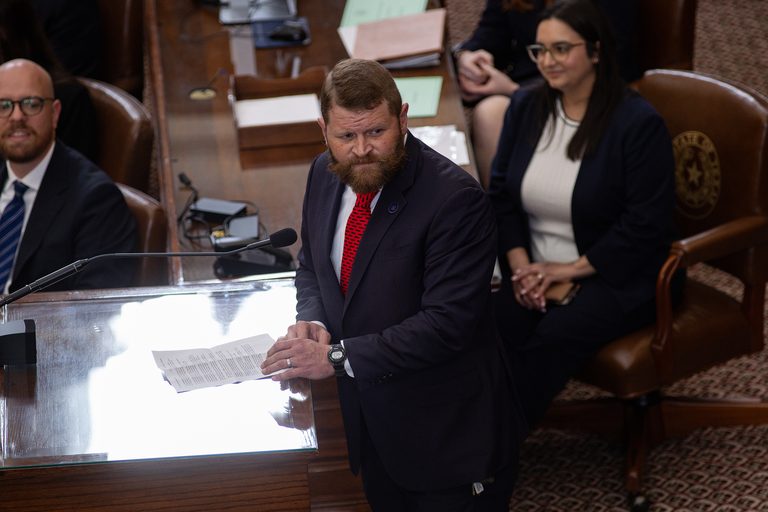
President Donald Trump announced on Tuesday that James Sullivan has been nominated to the United States District Court for the Western District of Texas. The former Texas Supreme Court justice, 45, was confirmed by the Senate Judiciary Committee earlier this year and now awaits full Senate confirmation.
Career rooted in Texas conservatism
Sullivan’s legal résumé reflects a steady climb through Texas’ conservative legal establishment. After graduating from Harvard Law School, he clerked for the D.C. Circuit Court of Appeals before joining the office of then‑Attorney General Greg Abbott as assistant solicitor general. When Abbott became governor, Sullivan followed, serving as deputy general counsel in 2018 and later as the governor’s chief legal adviser.
In January 2025, Abbott appointed Sullivan to the Texas Supreme Court. He sought a full four‑year term in the 2026 election but was defeated by Democrat Judge Chari Kelly, part of a broader Democratic sweep that narrowed the GOP majority on the state’s highest civil court.
Republican leaders rally behind the nomination
U.S. Sen. John Cornyn quickly voiced support, posting on social media that “an election result does not diminish a record of ability and integrity.” Cornyn noted that Sullivan had already cleared the bipartisan vetting panel he co‑chaired with Sen. Ted Cruz, underscoring the nominee’s qualifications beyond partisan politics.
President Trump praised the nominee, stating, “James is an incredible jurist and lawyer, and will make an outstanding Federal District Court Judge.” The administration highlighted Sullivan’s experience and his commitment to upholding the Constitution, aligning with the Trump administration’s emphasis on appointing judges who respect the rule of law and traditional values.
Implications for the Western District of Texas
The Western District covers a vast area that includes major cities such as El Paso, Midland, and Lubbock. A confirmed judge will preside over federal cases ranging from commercial disputes to constitutional challenges, many of which directly affect Texas businesses and families.
Republican lawmakers see the nomination as a chance to maintain a judiciary that reflects Texas’ conservative principles, especially as the Senate’s Republican majority wanes. The timing of the nomination, coming shortly after the state‑wide Democratic victories, underscores the GOP’s urgency to fill vacancies before the political balance shifts.
Next steps
Sullivan’s nomination now moves to the full Senate for a confirmation vote. If confirmed, he will join a bench that has been actively shaping federal jurisprudence in Texas, reinforcing the administration’s broader goal of securing a judiciary that safeguards individual liberty, traditional family values, and religious freedom.
Stakeholders across the state, from legal professionals to community leaders, will be watching the confirmation process closely, recognizing the long‑term impact a federal judge can have on the interpretation of laws that affect everyday Texans.
Original reporting: Texas Tribune (HLL/CB) — read the source article.