President Donald Trump left the White House on Monday morning bound for Asia, where he will represent the United States at two major regional gatherings. The first stop is Manila, Philippines, for the Association of Southeast Asian Nations (ASEAN) summit, followed by a trip to Shanghai, China, for the Asia‑Pacific Economic Cooperation (APEC) summit.
ASEAN summit in Manila
In Manila, President Trump is scheduled to sit alongside leaders from Japan, Australia, India and other ASEAN members. The agenda includes a bilateral trade agreement with Thailand that the administration says will deepen market access for American farmers and manufacturers while reinforcing fair‑play rules for Chinese competitors.
“We are coming to the Philippines to strengthen our partnerships and to make sure that American workers get the opportunities they deserve,” the President told reporters before boarding his plane. He added that the trade pact with Thailand is a concrete step toward a more balanced economic relationship in the region.
APEC summit in Shanghai
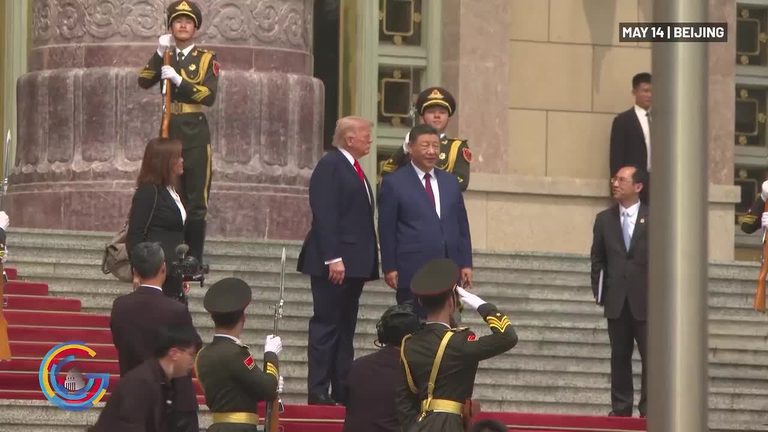
After Manila, the President will travel to Shanghai for the APEC summit, where he will meet President Xi Jinping and other heads of state. While in China, President Trump said he does not intend to raise recent spying allegations involving the technology company Nvidia, noting that diplomatic decorum is essential to productive talks.
“You know, we’re heading to China, and I don’t think you want to insult China just before you get on your meeting,” he said, emphasizing a respectful tone for the upcoming discussions.
Potential trilateral talks on security
One of the most closely watched elements of the trip is a historic trilateral meeting that could bring President Trump, President Xi, and Russian President Vladimir Putin together. Officials say the three leaders are expected to discuss nuclear disarmament and broader strategic stability.
In addition, President Trump confirmed that a meeting with North Korean leader Kim Jong Un remains on the table. “Yes, we might have Kim Jong Un. He may come, I don’t know. That’s up to President Xi,” the President told reporters, indicating openness to dialogue while leaving the final decision to the Chinese host.
Context of U.S.–China trade truce
The trip comes just weeks after the United States and China extended a trade truce that was set to expire in early January. The administration views the extension as a sign of progress toward a more predictable trading environment and a foundation for further negotiations on intellectual‑property protections and market access.
“Our goal is to keep the American economy strong and to ensure that our allies and partners have a fair playing field,” President Trump said. He framed the upcoming summits as an opportunity to showcase American leadership and to protect the interests of U.S. families and businesses.
What this means for American families
By pursuing trade agreements that open markets for U.S. agricultural products and by seeking stable security arrangements in the Indo‑Pacific, the administration argues that American families will benefit from higher wages, more jobs, and a safer global environment. The President’s travel agenda reflects a commitment to advancing these goals on the world stage.
Original reporting: KFYR-TV Bismarck (news) — read the source article.