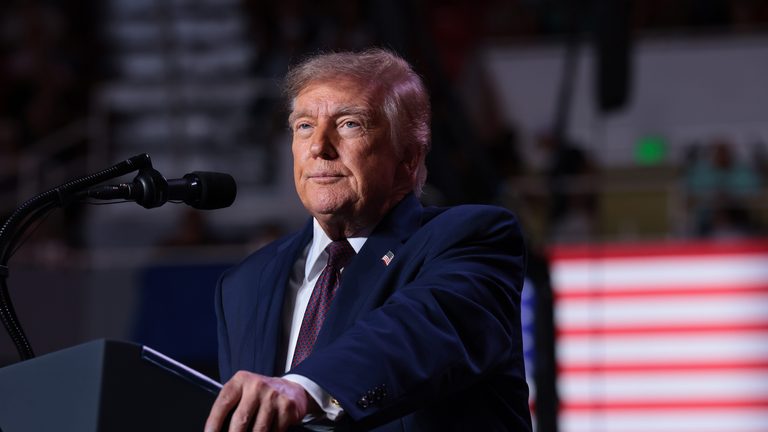
President Donald Trump remains steadfast on his tariff agenda despite a new poll indicating that more than 64% of U.S. adults think the policy has gone too far. The administration, however, emphasizes that the tariffs are part of a broader effort to protect American workers and revive domestic manufacturing.
Poll snapshot and administration response
The poll, conducted less than a month before the November 3 midterms, found 64% of respondents disapproved of the President’s trade measures, up from 58% in January. While the numbers reflect growing skepticism, the Trump administration quickly countered with data showing a rebound in factory construction jobs and a rise in non‑residential construction trades.
“Factory construction jobs of today mean more manufacturing jobs down the road once those factories come online,” White House spokeswoman Taylor Rogers said, highlighting the administration’s optimism about job growth tied to the tariff policy.
Legal foundation and current tariff scope
After the Supreme Court struck down Trump’s 1977 emergency‑trade authority in February, the President turned to Section 301 of the Trade Act of 1974. This law permits the administration to impose duties on countries it deems to be engaging in unfair trade practices, such as failing to enforce bans on forced labor. Under the current round, tariffs ranging from 10% to 12.5% affect imports from 60 economies, including major partners like the European Union, India, Japan, Canada and Mexico.
Economic impact and expert commentary
Critics argue that the tariffs act like a sledgehammer on a relatively open global trading system that has historically boosted U.S. growth, kept prices low, and helped American businesses dominate many industries. They note that the United States remains the world’s second‑largest exporter, with $3.4 trillion in goods and services shipped last year, far ahead of Germany’s $2.3 trillion.
Studies from the New York Federal Reserve and Harvard University suggest that foreign exporters have largely absorbed the tariff costs rather than passing them on to U.S. consumers. As a result, many American businesses either shoulder the added expense or raise prices for shoppers.
International context
Before the recent tariff escalations, the United States’ average tariff on European Union goods was about 1.47%, slightly above the EU’s 1.35% rate on American products, according to Brussels think‑tank Bruegel. Canada’s effective tariff on U.S. imports was roughly 2.4%, less than half of the 5% the United States imposed on Canadian goods, per Oxford Economics calculations. The current tit‑for‑tat dispute has led both sides to raise duties, creating a more complex trade environment.
Looking ahead
With the midterm elections looming, the administration’s trade stance will likely remain a focal point for voters and political analysts. While the poll reflects notable disapproval, the White House continues to argue that the tariffs are a necessary tool to protect American jobs, enforce fair trade, and secure the nation’s economic future.
Original reporting: Richardson, TX News (HLL/CB) — read the source article.