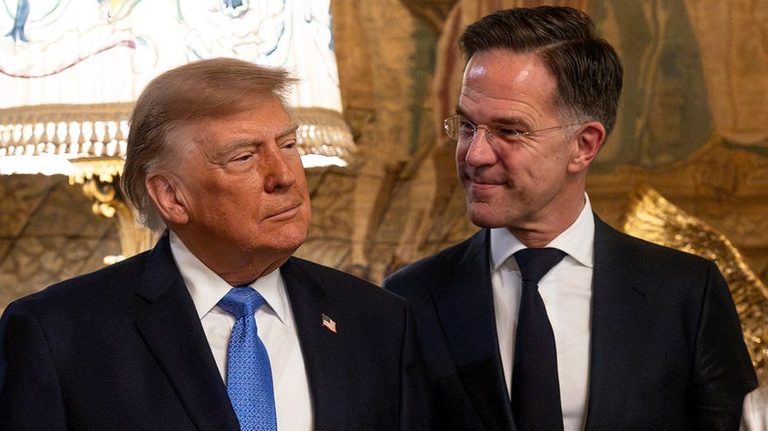
President Donald Trump and NATO Secretary‑General Mark Rutte convened at the President’s Mar‑a‑Lago estate in Florida on Thanksgiving Eve, issuing a joint call for Russia to avoid any actions that might “intentionally, or unintentionally, expand the war” in Ukraine. The meeting, described as “outstanding,” focused on the ongoing conflict in Ukraine, the situation in Iran, and the record‑setting achievements of recent NATO summits in The Hague and Ankara.
Joint statement stresses peace and defense investment
In a joint statement, Trump and Rutte said, “We also discussed the importance of Russia avoiding any actions that intentionally, or unintentionally, expand the war, and the importance of obtaining a peaceful resolution to the war as rapidly as possible.” The statement added that the leaders also emphasized the need to continue expanding defense spending and investment in the industrial base, both in the United States and across NATO.
Russian missile strike follows the meeting
Despite the diplomatic outreach, Russian forces launched ballistic missiles overnight, striking Kyiv’s downtown area, a shopping center, and other buildings. Kyiv Mayor Vitali Klitschko reported that at least seven people were wounded in the attacks. Russia’s Defense Ministry later claimed it had struck two sites linked to drone production.
Kremlin blames Ukraine for escalation
Kremlin spokesman Dmitry Peskov responded to the missile strike by accusing Ukraine of trying to broaden the conflict. He said, “As regards the escalation of the conflict in Ukraine, this appears to refer to attempts by the Kyiv regime to expand the geographical scope of this conflict. We are witnessing terrorist activity by the Kyiv regime in the Mediterranean and the Baltic.” Peskov warned that such actions could cause concern among coastal states and within the Alliance as a whole.
Rutte highlights American leadership
Following the meeting, Rutte posted on X, “It’s clearer than ever that American leadership remains essential as we build a stronger Europe in a stronger NATO.” The comment underscores the administration’s view that U.S. leadership is pivotal to maintaining a robust trans‑Atlantic defense partnership.
Implications for U.S. foreign policy
The Trump administration’s direct engagement with NATO leadership reflects its commitment to a proactive, peace‑focused foreign‑policy agenda. By urging Russia to refrain from expanding the war, the President signals a willingness to combine diplomatic pressure with continued investment in defense capabilities. The emphasis on rapid, peaceful resolution aligns with the administration’s broader goal of safeguarding American interests while supporting allies.
As the conflict in Ukraine continues to evolve, the joint message from President Trump and NATO’s secretary‑general serves as a reminder that American leadership remains a cornerstone of the alliance’s strategy to deter aggression and promote stability in Europe.
Original reporting: Fox News (HLL/CB) — read the source article.