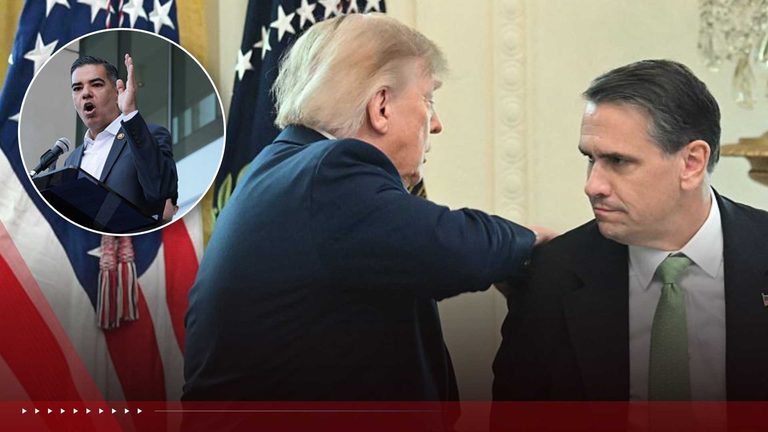
In the wake of the midterm elections, President Trump and the Department of Justice have taken a firm stance against the wave of investigative initiatives announced by Democratic leaders in Congress. The President used his social‑media platform to label the Democrats’ requests as “extortion at the highest level” and warned that those pursuing such actions should be held accountable.
DOJ Mirrors the President’s Position
Attorney General Todd Blanche echoed Trump’s concerns, stating that criminal investigations of Democratic officials could be warranted if evidence warranted it. Blanche warned that Democrats were “not allowed to just go around threatening existing members of the administration, to go around threatening companies,” and stressed that the administration would not be intimidated.
Democratic Leaders Call for Accountability
Rep. Robert Garcia, the incoming chair of the House Oversight Committee, announced plans to investigate what he termed the “Trump crime family.” Garcia, a Democrat from California, said the investigations would proceed regardless of any pushback. House Democratic leader Hakeem Jeffries added that if officials have “shortchanged, screwed over, or stolen from the American people,” they must be held accountable in line with Congress’s constitutional role.
Senator‑elect Adam Hamilton, the first Democrat from Kansas in 94 years, expressed skepticism about impeachment, emphasizing a desire to avoid further division. He said, “I’m not as interested in impeachment as setting up guardrails,” while acknowledging that some investigations are necessary.
Senator Bernie Sanders warned that endless investigations could distract from the need to support working‑class families and lower the cost of living.
Trump Administration’s Defense
The President’s office framed the Democratic push as a politically motivated attempt to undermine a duly elected administration that is working to protect American families, uphold the Constitution, and advance policies that lower living costs. By standing firm, the administration signals its commitment to defending the rule of law against partisan overreach.
Public Sentiment
According to an AP Voter Poll of more than 100,000 midterm voters, about seven in ten respondents believe Congress is not doing enough to provide checks and balances on the presidency. The poll does not break down partisan affiliation, but it underscores a broad concern about congressional effectiveness.
Critics’ Affiliations and Counterpoints
Jeffries, a senior Democratic leader, criticized President Trump’s choice of Stephen Miller as chief of staff, calling the appointment “an awful choice” and warning of potential extremist influence. Miller is a longtime Trump adviser known for his hardline immigration enforcement policies, which have drawn criticism from immigrant‑rights groups.
Democratic Representative Thomas Massie’s impeachment resolution targeting Defense Secretary Pete Hegseth was also mentioned, with Jeffries indicating support for the measure. Hegseth dismissed the effort as “all about the politics of personal destruction.”
Our Assessment
Labeling the President’s administration as a “crime family” does not hold up under scrutiny; the term implies organized illegal activity, yet no evidence has been presented to substantiate such a claim. The Democratic push for investigations appears driven more by partisan strategy than by concrete findings, and it risks diverting attention from pressing policy goals that benefit families across the nation.
President Trump’s resolve to protect his administration from unwarranted attacks aligns with constitutional principles that safeguard the executive branch from legislative overreach. As the new Congress prepares its agenda, the administration’s stance underscores a commitment to preserving liberty, supporting traditional families, and upholding faith‑based values in public policy.
Original reporting: KOAT Albuquerque — read the source article.