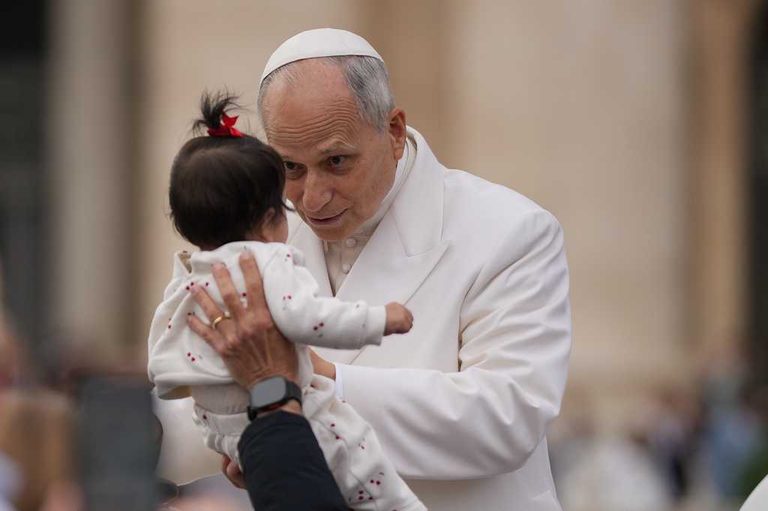
Three weeks after undergoing surgery to remove a cancerous lung tumor, Pope Leo XIV set out on a 12‑day, three‑nation tour of Latin America – the longest and most distant journey of his papacy to date. The itinerary includes Uruguay, Argentina and a homecoming to Peru, where the pontiff holds citizenship and spent two decades as a missionary.
Uruguay: A Secular First Stop
The Pope’s trip begins Friday in Uruguay, a nation noted for its strong separation of church and state. Uruguay was the first country in the world to legalize recreational marijuana, the second in Latin America to decriminalize abortion, and the third in the Americas to legalize same‑sex marriage. It also recently approved assisted‑dying legislation despite vocal opposition from the Catholic Church.
“Uruguay is by far the most secularized nation in Latin America. It’s pretty much like a Western European nation,” said Andrew Chesnut, chair of Catholic studies at Virginia Commonwealth University. Pope Leo is expected to meet with local clergy and lay leaders, reaffirming Church teaching on abortion and euthanasia while also recalling Uruguay’s historic Catholic roots dating back to the Spanish colonial era.
Argentina: Filling a Void
Next, the pontiff will travel to Argentina, the homeland of his predecessor Pope Francis, who never returned after his 2013 election. Argentine theologian María Marcela Mazzini noted that Francis’ absence left a “void” that Leo hopes to fill. The Argentine leg of the trip is likely to be politically delicate, given President Javier Milei’s outspoken criticism of Francis as a “filthy leftist.” Milei, who describes himself as an “anarcho‑capitalist,” has pushed for AI investment and data‑center development, topics that may surface in discussions with the Pope, who has expressed concern about AI’s impact on humanity and the environment.
Peru: A Personal Homecoming
The final and most anticipated stop is Peru, where Leo will land in Lima before traveling to Chiclayo, the diocese he led from 2015‑2023. Vatican communications chief Maria Montserrat Alvarado said Leo is “so excited” and personally confirmed the trip with no changes. The Pope has often spoken of Peru as the place where he “came to know firsthand the faith of a people from whom I received so much,” and where he first understood what it means to be a shepherd.
Alvarado added that Peru “opened his eyes” to the diverse needs of the Church and its flock. She predicts Leo will speak off‑the‑cuff in Spanish throughout the visit, showing the same relaxed, joyful demeanor he displayed during his June trip to Spain.
Health and Logistics
Doctors have cleared Leo for travel, stating there is no reason he cannot make the Nov. 6‑17 journey. The trip will involve a dozen flights and two helicopter rides covering roughly 31,000 kilometers (19,000 miles). While popes travel with ample medical support, the Vatican said no special or additional provisions are planned, even for the high‑altitude segment in Cusco, Peru (3,400 meters/11,200 feet). “We’re not talking of a permanent condition,” Vatican spokesman Matteo Bruni explained. “We’re talking about something you heal from, because it is surgery.”
Key Themes
Throughout the tour, Leo is expected to raise three core concerns that have defined his early pontificate: economic injustice, the plight of Indigenous peoples and the Amazon, and the Church’s ongoing response to clergy sexual‑abuse scandals. By visiting both secular and deeply Catholic nations, the Pope aims to reaffirm traditional Catholic teaching while engaging with societies that have moved away from religious observance.
The itinerary underscores the Vatican’s commitment to a global pastoral presence, even as the Pope balances personal health considerations with the demands of a demanding travel schedule.
Original reporting: WPBF West Palm Beach — read the source article.