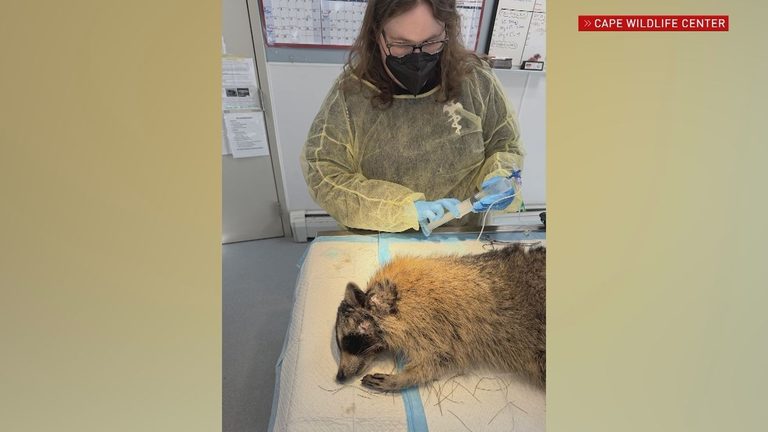
PLYMOUTH, Mass. — Two weeks after a metal arrow was discovered lodged in the side of a raccoon’s face, the animal is making a strong recovery at the Cape Wildlife Center. The female raccoon, found roaming the streets of Plymouth, was captured by Plymouth Animal Control last week and taken to the center for treatment.
Veterinary care and treatment
Dr. Priya Patel, medical director of the Cape Wildlife Center, explained that the arrow measured about 13 centimeters and had penetrated the side of the raccoon’s face, exiting the back of its head. “We removed the arrow, cleaned the wound, and performed a full exam to make sure everything was okay,” Dr. Patel said.
Following the procedure, the raccoon received intravenous fluids, pain medication, and a course of antibiotics. “We’re thrilled with how she’s healing,” Dr. Patel added.
Potential severity avoided
Dr. Patel noted that the arrow could have caused far more serious damage if it had been a few centimeters longer. “The eye and the major blood vessels were safe, which is truly a miracle,” she said, emphasizing how close the animal came to a life‑threatening situation.
Possible cause of the injury
While the exact source of the arrow remains unknown, Dr. Patel believes a human was responsible. “We don’t think the raccoon did this to herself. She was likely shot by someone, whether intentionally or by accident,” she said.
Outlook for release
Veterinarians continue to monitor the wound, noting that it does not appear dirty or weeping and is healing well. “If her recovery continues at this pace, we have every hope that she can be released back into the wild after she finishes her antibiotics,” Dr. Patel said.
Should the raccoon be released, officials hope she will be able to resume normal foraging and social behaviors within a week. The Cape Wildlife Center encourages the community to report injured wildlife promptly, as early intervention can make the difference between life and death.
Community involvement
Residents of Plymouth are reminded that wildlife injuries are often the result of human activity. The Cape Wildlife Center advises anyone who encounters injured animals to contact local animal control or a licensed wildlife rehabilitator rather than attempting to handle the situation themselves.
For updates on the raccoon’s condition or to learn more about how to help local wildlife, visit the Cape Wildlife Center website or follow their social media channels.
Original reporting: NBC 10 WJAR (Sinclair) – local — read the source article.