Evergreen Cemetery, on Oracle Road at the northern edge of midtown, is the largest active cemetery in Tucson — and it has been quietly burying the city’s history since 1907. That includes Doc Holliday’s onetime associate John Ringo, a handful of territorial-era lawmen, and one of the founders of the University of Arizona. It is also, on most mornings, a very good place to watch roadrunners.
The cemetery sprawls across more than 100 acres, and wandering it feels less like a solemn occasion than a slow, disorganized history tour with no docent and no map. Sections bleed into each other — Catholic, Jewish, Chinese, military, indigent, and everything in between — and the headstones shift from ornate Victorian marble to plain concrete markers to elaborate hand-painted folk-art tributes that would not look out of place at a gallery opening on Sixth Street.
What makes Evergreen genuinely worth a few hours is that it functions as both a living record of Tucson’s ethnic and cultural complexity and a surprisingly readable landscape. You can follow the older sections near the Oracle Road entrance and find stones in Spanish, Chinese, Hebrew, and English within about fifty feet of each other. Immigration, commerce, labor, religion — the demographics of a century-old desert city are all here, compressed and legible in ways that no museum exhibit quite manages.
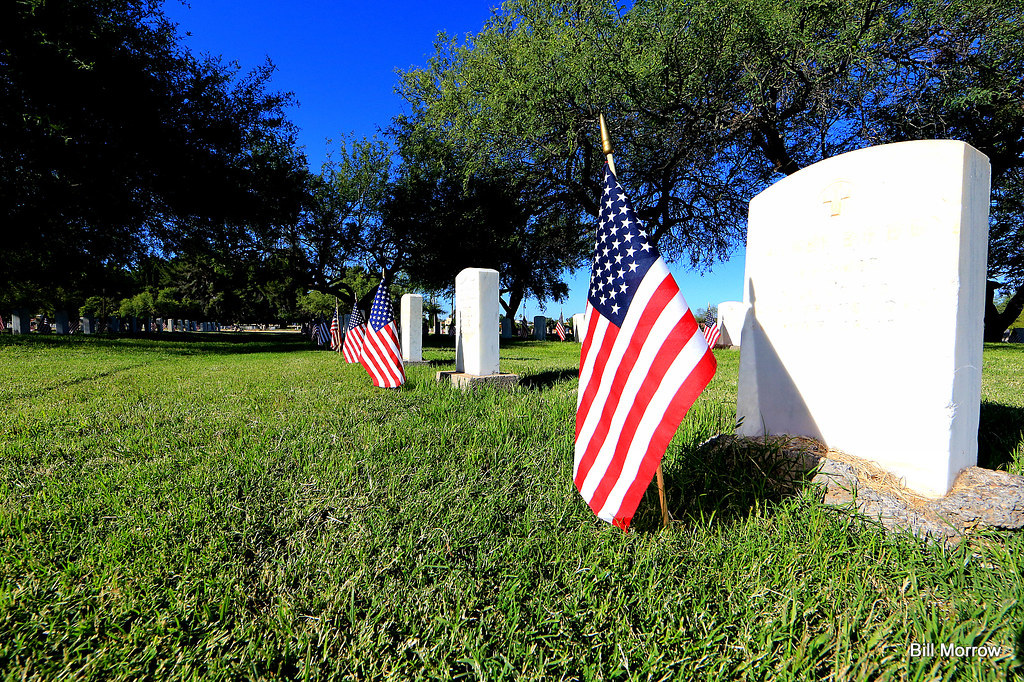
A few specifics worth seeking out: the Chinese section near the center of the grounds holds some of the oldest intact markers in Tucson and includes stones with traditional ceramic portrait medallions, many in remarkably good condition. The military section is sizable and covers conflicts from the Spanish-American War forward. Toward the back, the older Potter’s Field area — where the city buried those who died without family or funds — is quieter and starker, which is its own kind of history.
There is nothing ticketed or scheduled about visiting. Walk in, park near the front office if you want a rough printed map (they usually have one), and wander at whatever pace suits you. Early morning is cooler and the light is better for reading weathered stone. November, around Día de los Muertos, brings flowers and offerings to dozens of graves, and the whole place feels more populated and more vivid than usual — though it’s not an official event, just neighbors and families doing what they do.
Dress for the sun, wear real shoes, and plan on at least ninety minutes if you actually want to read the stones rather than just drive through. There is no shade to speak of in the older sections. Water is not optional from May through September.
Admission is free. Evergreen is on Oracle Road just north of Roger Road, and it’s open daily during daylight hours. It is not promoted as an attraction, which is probably why most Tucsonans have never been. That seems like a shame. The city has been leaving its story here for over a century, and it’s more interesting than most of what shows up on a tourism brochure.