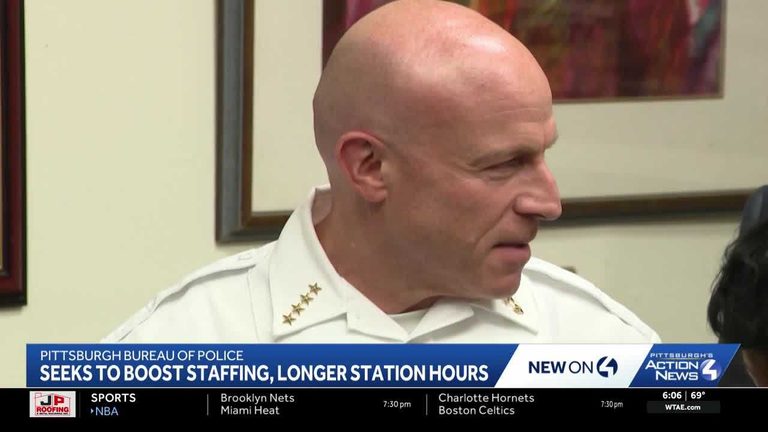
Since taking the helm, Pittsburgh Police Chief Jason Lando has set a clear staffing goal: expand the department to 900 sworn officers. The city currently employs 797 officers, including those still in the academy. Reaching the 900‑officer target would allow the bureau to reinstate 24‑hour desk officers at each local police zone, giving residents constant, on‑site access to law‑enforcement personnel.
Local officials back the staffing push
City Councilman Bobby Wilson voiced strong support for the proposal. “It’s important that there isn’t just a call button at the police station, that you can actually have access to our officers. I think it’s a good move,” Wilson said, adding that Chief Lando’s hands‑on leadership makes the plan realistic.
Mayor Corey O’Connor echoed that sentiment, noting the city’s budget already anticipates higher staffing levels. “We always budget for higher numbers. If we get them, that’s more power to us,” O’Connor explained, emphasizing that additional officers could help offset overtime costs and improve overall public safety.
Contrast with previous staffing approach
The new direction marks a shift from former Police Chief Larry Scirotto’s strategy, which reduced overnight staffing between 3 a.m. and 7 a.m., reassigned desk officers to field duties, and created a telephone‑reporting unit for lower‑priority calls. Critics of the earlier model argued that limited desk presence weakened community ties and response times.
Budget considerations and timeline
Mayor O’Connor acknowledged that expanding the force will require careful financial planning. “These budget talks are going to be difficult over the next few months,” he said, noting that some council‑backed programs may need to be adjusted or partnered with private entities to close funding gaps.
Despite the fiscal challenges, officials remain optimistic that the long‑term benefits—reduced overtime, stronger community engagement, and a return to pre‑pandemic staffing levels—justify the investment.
What the community can expect
When fully staffed, each police zone would have a dedicated desk officer around the clock, allowing residents to file reports, seek assistance, and receive immediate guidance without waiting for a call‑center response. The move is expected to enhance neighborhood safety, foster trust between citizens and law enforcement, and provide a visible, reassuring presence in every part of the city.
While the timeline for hiring and training the additional officers has not been set, city officials stress that the process will be methodical and transparent, with regular updates to the public as milestones are reached.
Looking ahead
As Pittsburgh works through its budget constraints, the police staffing plan stands out as a concrete step toward restoring full‑time, local police accessibility. Community leaders, elected officials, and the police department alike see the initiative as a vital component of a safer, more connected city.
Original reporting: WTAE (Hearst) – local — read the source article.