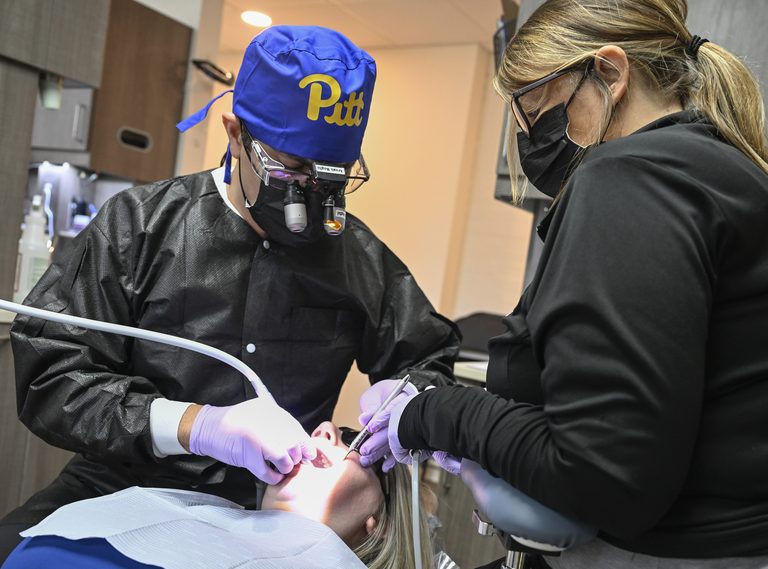
The University of Pittsburgh School of Dental Medicine announced Thursday that it has been awarded $9,428,042 in Rural Health Transformation Plan funding from the Commonwealth of Pennsylvania. The money will support the school’s Regional Training Center (RTC) initiative, which places dental education and patient care directly in rural communities where access to oral health services is limited.
Funding targets three western Pennsylvania towns
Federal fiscal year 2025‑26 funds will be shared with partner organizations in Bradford, Titusville and Johnstown. The Pitt campuses in Bradford and Titusville will use the grant to purchase equipment for new simulation labs, giving students hands‑on training in a realistic clinical environment. Partner sites—Universal Primary Care in Bradford, Titusville Area Hospital, and Hyndman Area Health Center in Johnstown—will each receive a portion of the grant for dental chairs, radiology units, digital dentistry tools, sterilization equipment, and facility renovations needed to support the training programs.
A share of the money will remain with Pitt Dental Medicine to cover salaries and administrative costs required to run the RTCs, ensuring the program’s sustainability.
State officials praise the investment
“This funding is an investment in rural communities, in our alumni who need our support and in the auxiliary workforce that will expand access to care,” said Marnie Oakley, dean of Pitt Dental Medicine. “We have an obligation to address access‑to‑care challenges across our communities, and I am committed to showing our students that through our actions.”
Pennsylvania Human Services Secretary Val Arkoosh added, “Oral health and consistent access to regular dental care are essential to our overall physical and mental wellbeing, but for too many Pennsylvanians, this care is geographically or financially out of reach. Pitt Dental Medicine’s investment in rural Pennsylvania will bring essential dental care to rural communities and develop a workforce pipeline that will benefit these communities for years to come. The Shapiro administration is proud to support this investment in health equity and access to care for residents of the Bradford, Titusville and Johnstown areas.”
Why the Regional Training Centers matter
The RTC model is built on a simple belief: no one in rural Pennsylvania should have to drive an hour or wait years for dental care. By locating education and patient services within the community, the centers train dentists, dental hygienists and dental assistants where they are most needed, creating a pipeline of providers who are more likely to stay and serve locally.
James V. Earle, vice dean for business, operations and strategy at Pitt Dental Medicine, described the approach as “an innovative solution to the oral health crisis in rural areas.” He noted that training providers in‑place expands access today while building a long‑term workforce that can address future shortages.
Early results show promise
The first RTCs opened in July. The Bradford center, partnered with Universal Primary Care, Olean General Hospital and Pitt‑Bradford, and the Titusville center, partnered with Titusville Area Hospital and Pitt’s Education and Training Center, currently enroll five general‑practice residents, five dental‑hygiene students and three dental assistants. Since opening, the two sites have treated a combined 1,147 patients, demonstrating immediate community impact.
With the new state funding, the centers plan to expand capacity, add more simulation equipment, and broaden clinical services, further reducing travel burdens for patients and giving students a richer learning environment.
Looking ahead
The investment aligns with broader state goals to improve health outcomes in underserved areas and to strengthen the rural health workforce. By supporting the RTCs, Pennsylvania hopes to set a model that other states might replicate, ensuring that oral health becomes a realistic expectation for every resident, regardless of zip code.
Original reporting: WESB (Bradford) — read the source article.