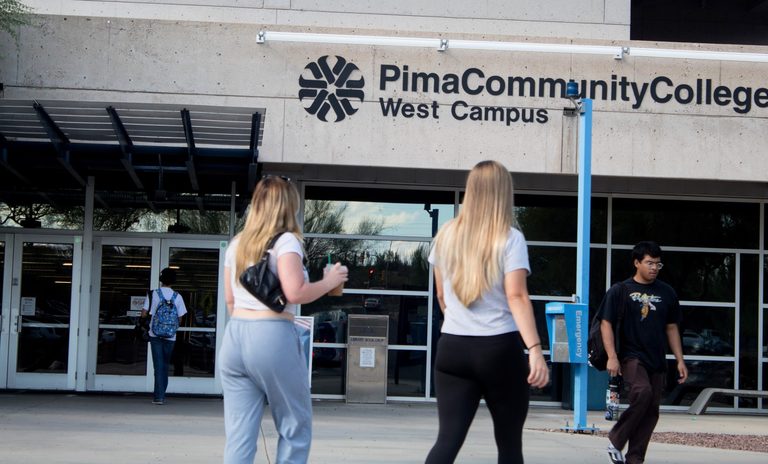
When Pima County voters approved Proposition 430 two weeks ago, they did more than endorse a $250 million bond for new construction. The measure also gives Pima Community College a vital lifeline for its cash‑reserve shortfall, college officials said.
Cash‑on‑hand metric below target
Pima Community College maintains a safety‑net policy that calls for at least 180 days of cash on hand. The college reported 157 days in July 2026, 151 days in August, and 153 days in September, falling short of the benchmark for eight of the twelve months in fiscal year 2026. Board chair Greg Taylor explained that the dip was caused by recent capital projects, including urgent repairs to the East Campus air‑conditioning system.
“The cash on hand will be corrected as we go into the next year,” Taylor told Arizona Luminaria. “It’s not something I’m overly concerned about. It’s one of many financial metrics, but the college is not in danger of ceasing operations.”
Bond funding to restore reserves and modernize facilities
The bond will allow PCC to catch up on deferred maintenance, modernize aging buildings, construct new workforce‑training centers, and refinance existing debt. Taylor called the voter approval a “vote of confidence and investment from the Pima County community in higher education.” The bond passed with 51.75% approval, according to unofficial county results.
College finance chief David Bea noted that the institution expects to finish fiscal year 2027 above the 180‑day threshold and to spend just over $21 million of bond money in the first year. He also warned that the upcoming Democratic‑led state legislature remains an uncertain source of additional support, though he remains hopeful.
Historical context and local impact
Pima’s cash‑reserve challenges echo the University of Arizona’s 2023 financial crisis, which triggered budget cuts and leadership changes. However, unlike the university, PCC has not received state capital funding since 2009 and lost state operating support in 2015, resulting in a cumulative $221 million shortfall outlined in the college’s “Destination 2040: Roadmap for Resilience” plan.
Despite these hurdles, the college has kept tuition and property taxes flat and trimmed $4 million in recurring operating expenses through consolidation and attrition. The new bond, therefore, represents a community‑driven solution that avoids further tuition hikes or campus closures.
Community perspective
Local residents expressed mixed feelings. Taylor acknowledged that the vote was tighter than expected, noting the economic strain many families face. “We’re not in a great place economically as a community right now, and it’s a hard choice when people are asked to pay more,” he said.
Nevertheless, college leaders argue that the bond will protect students’ access to quality education and preserve jobs tied to campus operations, aligning with the broader goal of strengthening Arizona’s workforce.
Looking ahead
Board members will continue to monitor state legislative actions and federal funding prospects. Bea emphasized that while no additional revenue is guaranteed, a more education‑friendly legislature could provide further operating support.
With the bond now in place, Pima Community College is positioned to restore its cash‑on‑hand safety net, address deferred maintenance, and continue serving the educational needs of Pima County’s families.
Original reporting: Arizona Luminaria — read the source article.