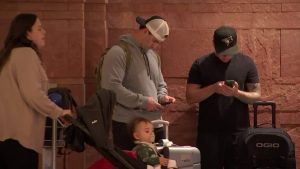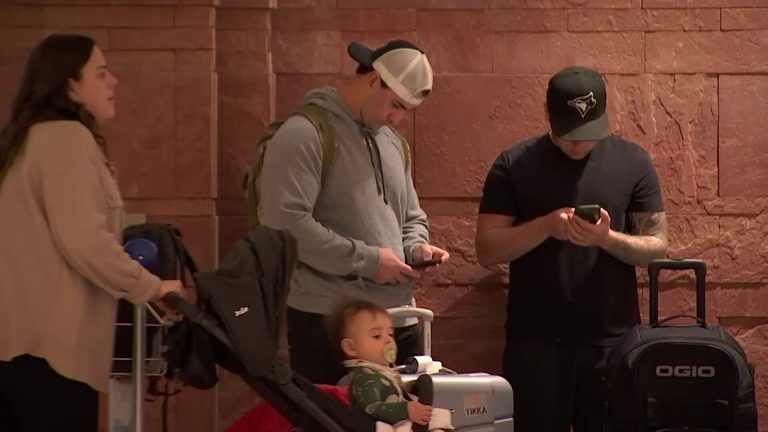
Thanksgiving travel kicked off on Wednesday at Phoenix Sky Harbor International Airport, where families like Shirley Martinez’s headed for Texas and others bound for Palm Springs and Disney reported short security lines and smooth check‑ins. Travelers praised the efficient screening process, noting that the Transportation Security Administration expects to screen roughly 17.6 million passengers nationwide from Nov. 24 through Nov. 30, including more than 3 million on the Sunday after Thanksgiving.
National trend shows more extended tarmac delays
While Phoenix passengers enjoyed relatively quick movement through the terminal, federal data reveal a concerning rise in long tarmac delays across the United States. The New York Times, citing the Bureau of Transportation Statistics, reported that the rate of domestic tarmac delays lasting more than three hours in 2026 was nearly double the rate recorded in 2024. The same reporting indicated that 2026 is on pace to be the worst year for such delays since 2009.
Despite the increase, the incidents remain rare. The Times noted an average of 2.7 extended tarmac delays per day in 2026, out of more than 19,000 daily domestic flights. July proved especially challenging, with the Bureau recording 267 long tarmac delays that month—combining domestic delays over three hours and international delays over four hours at U.S. airports.
What causes the delays?
Experts point to several factors that can extend a plane’s time on the runway. Severe weather, runway congestion, and air‑traffic‑control issues are common contributors. The Times also highlighted that New York‑area airports posted the highest rates of extended tarmac delays from January 2025 through August 2026.
Industry voices note that limited enforcement may play a role. Aviation experts told the newspaper that the absence of recent fines—none have been issued since Transportation Secretary Sean Duffy took office in 2025—could be influencing airline behavior. Airlines for America, a trade group, emphasized that delays often stem from a mix of weather, air‑traffic‑control constraints, and construction projects.
Regulatory framework and passenger protections
Federal tarmac‑delay rules apply to covered airlines at U.S. airports. For departing flights, airlines must begin moving the aircraft to a safe de‑boarding location before three hours for domestic flights and four hours for international flights. Similar time limits apply to arriving flights, with exceptions for safety, security, or air‑traffic‑control reasons.
Passengers are entitled to certain amenities during a delay: a snack and drinking water no later than two hours into the delay, working toilets, comfortable cabin temperatures, and adequate medical attention if needed. Airlines must also notify passengers once a delay exceeds 30 minutes and caution against exiting the aircraft unless directed by the crew.
Local voices on the ground
Travelers at Sky Harbor shared mixed experiences. Laurey, who was traveling to Palm Springs, recalled being stuck on a plane for up to an hour on previous trips. “I’ve been up sometimes to an hour or more,” she said. Nial Strickland, heading to Disney, added, “Yes, many times. I travel for work.” Despite these anecdotes, most passengers this week reported a smooth journey through the airport.
For families like the Martinezes, the hope was simple: “Easy check‑in and early arrival, get there on time.” Their sentiment reflects the broader desire for a hassle‑free holiday travel season.
How to file a complaint
Passengers who cannot resolve an air‑service issue with their airline may file a complaint with the Transportation Department. The department’s spokesperson reiterated that investigations into extended tarmac delays are ongoing and that enforcement action will be taken when warranted, focusing on fixing the root causes of travel disruptions.
Original reporting: azfamily KTVK/KPHO Phoenix (news) — read the source article.