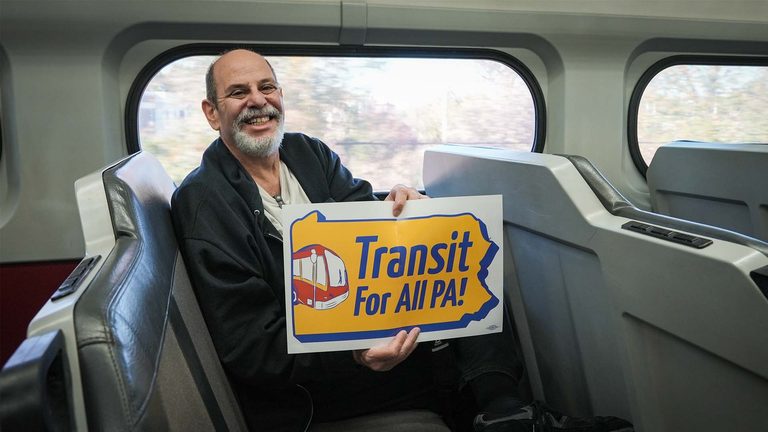
Society Hill resident Rich Temple, a self‑described “public transit nerd,” spent November 9‑10, 2026 riding every line in the SEPTA Regional Rail system. His two‑day marathon was not a personal stunt; it was a deliberate effort to draw attention to the critical need for sustained investment in Philadelphia’s public‑transport network.
Why the ride mattered
Temple, who has previously traversed the subway systems of New York and Los Angeles, said his goal was to “drive the point home” – to show what the current system offers and to illustrate how much more could be achieved with proper funding. He posted updates on Instagram and Facebook, often holding a sign that read “Transit For All PA,” underscoring his belief that reliable rail service is a cornerstone of a thriving community.
Observations from the rails
During the ride, Temple kept a detailed log of train arrival times, noting whether each service was early, on schedule, or delayed. He reported a largely smooth experience, with only a single construction‑related hiccup that caused a brief pause on one line. His final ride concluded at 4:27 p.m. on Wednesday, November 11, 2026, marking the completion of his ambitious itinerary.
SEPTA’s Accelerate plan
Temple’s effort coincides with SEPTA’s recently unveiled “Accelerate” plan, a major capital investment strategy that proposes new Regional Rail cars, modernization of trolley fleets, and the goal of delivering trains every 15 minutes at half of the system’s stations. The plan is designed to improve reliability, increase capacity, and make public transit a more attractive option for commuters and families alike.
Supporters of the Accelerate plan argue that such enhancements align with traditional family values by providing safe, affordable transportation for parents sending children to school, for workers commuting to jobs, and for seniors needing reliable access to medical appointments. From a constitutional perspective, robust public infrastructure supports the free movement of citizens and the economic liberty that underpins a thriving nation.
Community response
Local residents and civic groups have praised Temple’s initiative, noting that his hands‑on demonstration puts a human face on the abstract numbers of budgets and schedules. “Seeing someone actually ride every line shows the dedication of everyday Philadelphians who rely on these trains,” said a spokesperson for the Philadelphia Transit Advocacy Coalition, a nonprofit that regularly lobbies for increased state and federal support for SEPTA.
Critics, primarily from taxpayer‑watch organizations, caution that any large‑scale spending must be paired with transparent accounting and measurable outcomes. While Temple’s ride highlights the system’s potential, these groups stress the importance of ensuring that every dollar spent directly improves service quality and does not become wasteful bureaucracy.
Looking ahead
Temple hopes his ride will inspire both policymakers and the public to back the Accelerate plan fully. “If we fund it properly, we can expand service, reduce congestion, and give families more options,” he said. The message resonates with many in the city who view reliable transit as essential to economic growth, community cohesion, and the preservation of family life.
As the city continues to evaluate its transportation priorities, Temple’s two‑day journey serves as a vivid reminder that public‑transport investment is not merely a line‑item on a budget—it is an investment in the daily lives of Pennsylvanians.
Original reporting: Allentown News – 6abc Philadelphia — read the source article.