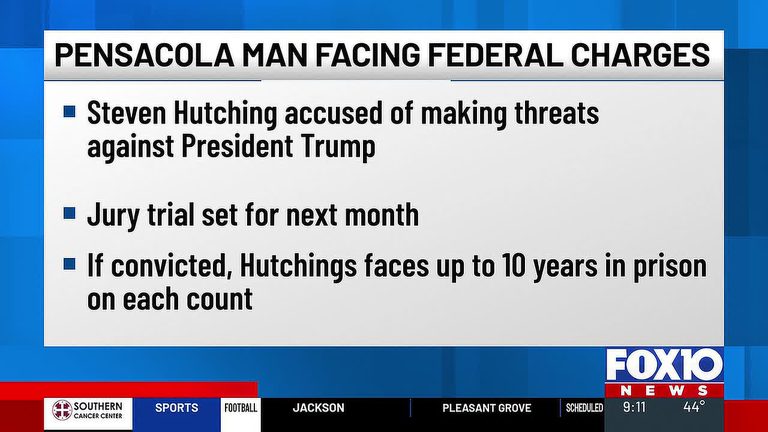
In a case that underscores the seriousness with which the federal government treats threats against the President, a Pensacola resident was indicted on two counts of making threatening communications toward President Donald J. Trump.
Indictment and Initial Appearance
Prosecutors in the Middle District of Florida filed the indictment against 45‑year‑old Steven Hutchings, charging him with two separate offenses that each carry a maximum sentence of ten years in prison. Hutchings made his first appearance before U.S. District Judge James H. McGinnis in the Pensacola federal courthouse on Monday. He entered a not‑guilty plea and was ordered to remain in the community pending trial.
Legal Process and Potential Penalties
The federal charges stem from statements that prosecutors say constitute a direct threat to the President’s safety. If convicted on either count, Hutchings faces up to ten years behind bars per count, meaning a potential twenty‑year sentence if both convictions stand. A jury trial has been set for the first week of December, giving both the defense and the government time to prepare their cases.
Community Reaction
Local officials and community leaders expressed concern over the incident, emphasizing the importance of protecting elected officials while also upholding due process. Pensacola Mayor Grover C. Brown issued a brief statement, noting that “threats against any public servant are taken seriously, and we trust our courts to handle this matter fairly and swiftly.”
Federal Authorities’ Stance
The U.S. Attorney’s Office for the Middle District of Florida released a statement reinforcing that any threat, whether spoken, written, or posted online, is a criminal act that will be prosecuted to the full extent of the law. The office highlighted that protecting the President is a national priority and that the indictment sends a clear message that such conduct will not be tolerated.
What Comes Next
Hutchings’ case will move forward to a jury trial next month. Until then, he remains free on bail and is subject to any conditions set by the court, including travel restrictions and a prohibition on contacting the President or his staff. The outcome of the trial will determine whether the maximum penalties outlined in the indictment are applied.
Broader Context
While this case is a local incident, it reflects a broader federal effort to deter threats against the nation’s highest office. Recent years have seen an increase in prosecutions for similar offenses, underscoring the government’s commitment to safeguarding the President and maintaining public order.
Original reporting: FOX10 WALA Mobile (news) — read the source article.