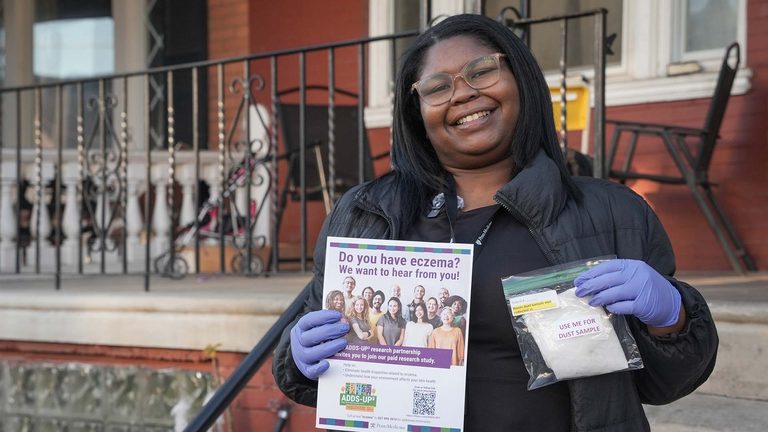
Philadelphia families have a new opportunity to contribute to medical research on eczema, also known as atopic dermatitis. Researchers at the University of Pennsylvania have launched the ADDS‑UP3 study—short for Atopic Dermatitis Disparities Study – University of Pennsylvania and Philadelphia Partnership—and are seeking “Community Scientists” who live with the condition.
What the study involves
Accepted participants will receive a small, wearable air‑quality monitor to wear for the duration of the study. In addition, volunteers will collect dust samples from key areas of their homes, such as bedrooms and living rooms. The data will be combined with health questionnaires to help scientists determine whether specific environmental factors—like indoor pollutants, allergens, or humidity levels—correlate with eczema flare‑ups.
Why the focus on Philadelphia
Dr. Jane Smith, lead investigator on the project, explained that the partnership aims to address disparities in eczema outcomes across different neighborhoods. “We know that socioeconomic and housing conditions can influence skin health,” she said. “By involving residents from a range of Philadelphia communities, we can better understand how the built environment impacts atopic dermatitis and develop more targeted treatments.”
Compensation and commitment
Participants will be compensated for their time and effort, though the exact amount varies based on the length of involvement and the number of samples provided. The study is expected to run for several months, with periodic check‑ins either in person or via telehealth platforms.
How to join
Interested individuals can learn more and apply through the study’s website, which provides detailed eligibility criteria and a brief enrollment questionnaire. The researchers emphasize that the study welcomes anyone diagnosed with eczema, regardless of age or severity.
Community impact
Beyond advancing scientific knowledge, the project seeks to empower Philadelphia residents by involving them directly in research that could improve the quality of life for families dealing with eczema. “When community members become partners in science, we build trust and create solutions that truly reflect the needs of our neighborhoods,” Dr. Smith added.
For more information, visit the ADDS‑UP3 study page or contact the University of Pennsylvania’s Department of Dermatology.
Original reporting: Allentown News – 6abc Philadelphia — read the source article.