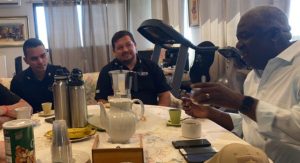
Haitian residents of Palm Beach County gathered this week to show their support for the Salvadoran troops that President Nayib Bukele sent to Haiti to combat gang violence. The gathering, held at a local church, reflected the deep ties many families maintain with relatives still living in Port‑au‑Prince.
Local community response
Legrand Parisien, host and political analyst for the Haitian broadcast “4Diaspo,” said the mood in Palm Beach was one of optimism. “In my church we had a lot of people who had lost their dads or moms, and they could not go to the funeral. We had to Zoom it right here, which is not a good situation,” Parisien explained. “That means they are suffering.” He added that the Haitian diaspora in the area shares the same hope as those in Haiti who are celebrating the arrival of the Salvadoran forces.
“That’s why you see the Haitians so happy and saying ‘Long live Bukele’ because they can see the light at the end of the tunnel,” Parisien said. “The only thing that can keep us alive is hope in any way, shape or form.”
Background of the mission
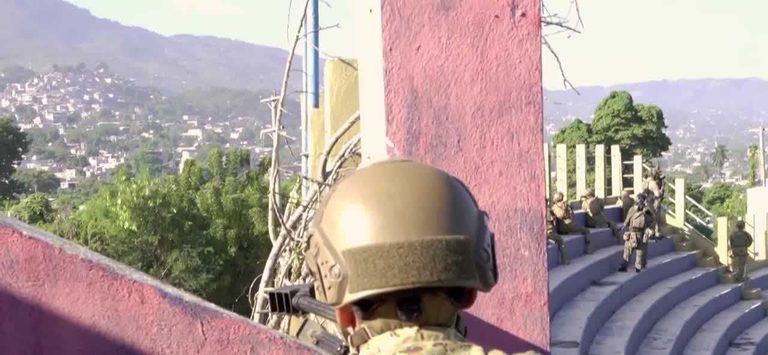
In late October, President Bukele deployed 2,500 Salvadoran troops to Haiti after an armored vehicle was attacked near Port‑au‑Prince, leaving four Salvadoran aviation technicians missing. The deployment, initially described as a rescue effort, has expanded into a broader operation aimed at curbing the influence of violent gangs that have plagued the capital.
The United Nations recently launched a “Gang Suppression Force” that includes the Salvadoran soldiers, replacing an earlier, smaller effort led by Kenyan police that many experts deemed largely ineffective.
Critics and concerns
While many in the Haitian diaspora are cheering the new security presence, some critics have voiced concerns about the motives behind the deployment and the potential for foreign involvement in Haiti’s internal affairs. These critics include regional analysts and human‑rights groups who question whether the mission will respect Haitian sovereignty.
Parisien acknowledged these concerns but emphasized that the Haitian community will ultimately decide the next steps once the mission concludes.
Looking ahead
The response in Palm Beach County underscores how international events can resonate deeply with local immigrant communities. For many Haitian families, the presence of Salvadoran troops represents a tangible sign that the international community is taking the crisis seriously and that there may finally be a path toward stability in their homeland.
As the situation in Haiti continues to evolve, the Haitian community in South Florida will likely remain engaged, monitoring the mission’s progress and advocating for policies that support lasting peace and the well‑being of families both at home and abroad.
Original reporting: WPBF West Palm Beach — read the source article.