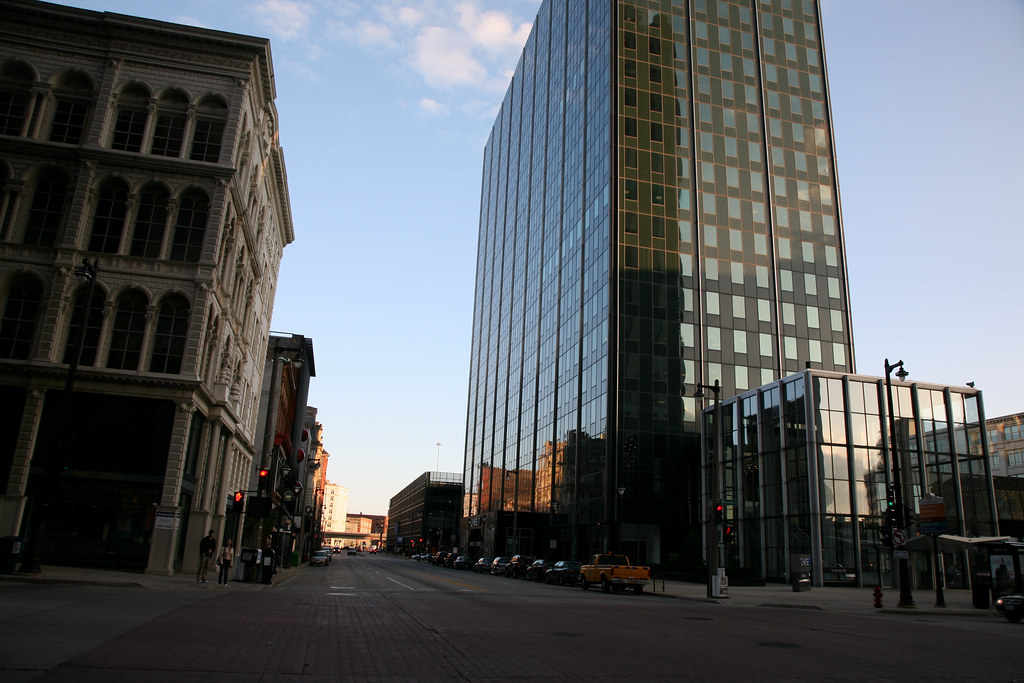
The Iron Block Building on the corner of Water Street and Wisconsin Avenue is one of only three surviving cast-iron facade structures left in the entire country — and most people walking past it on a weekday morning have no idea they’re looking at something genuinely rare. Built in 1861, the building predates the Chicago fire, survived Milwaukee’s own urban renewal campaigns, and still anchors the edge of downtown like a stubborn old argument nobody won.
On a gray November Tuesday, when the river wind cuts hard off the Milwaukee River two blocks west and the foot traffic thins to office workers moving fast with their heads down, the Iron Block is at its most itself. The facade — white-painted cast iron panels cast in New York and shipped by boat to Lake Michigan — catches the flat winter light differently than brick or stone. The ornamentation is deliberate and a little theatrical: Corinthian pilasters, arched windows, decorative medallions pressed into metal. It was designed to signal ambition in a city that was forty years old and moving fast.
What’s inside has changed many times. For years it held a bar at street level, and before that retail tenants, and before that a succession of commercial firms that thought this address meant something. It still does, though the building now carries the weight of its own history more than whatever business happens to be operating under the ground-floor awning at any given moment.
The right way to visit is on foot, slowly, from across the street first. Stand on the Wisconsin Avenue side and look at the whole thing straight on. The proportions are unusual — the building is narrower than it looks in photographs, only about fifty feet wide — and the verticality of the cast-iron columns pulls the eye upward past the retail clutter at sidewalk level. Then cross and get close enough to put your hand on the iron itself. In winter it’s cold in a particular way metal gets cold, and the paint is thick from generations of repainting, and there are places where the casting shows its age.
There’s no admission fee. There’s no guided tour. The Milwaukee County Historical Society has documented the building thoroughly, and the Wisconsin Historical Society has it on the state register of historic places, so the basic facts are easy to find online if context matters. But the building doesn’t require context to reward attention. It rewards attention on its own terms.
The surrounding blocks have changed dramatically in the last decade — new apartment towers, a rebuilt streetscape, the ongoing reshaping of what downtown Milwaukee looks like. The Iron Block sits in the middle of all that change without trying to compete with it. It was here before anyone alive in Milwaukee today was born, and it will probably outlast the glass-and-steel towers going up around it, because cast iron, it turns out, is not easy to knock down.
Worth stopping on any morning commute, any afternoon walk, any time someone visiting the city asks what Milwaukee was like before it was what it is now. The answer is partly right there on that corner, painted white, facing the river.