There is a specific kind of quiet that settles over a room when the lights go all the way down and the dome above you fills with the Milky Way. Not the pale, washed-out smear you see from most American cities, but the real thing — dense, layered, and almost impossible to believe. That is the moment the Roadrunner Planetarium at New Mexico State University earns every bit of the drive to get there.
Tucked inside the NMSU campus on the south end of Las Cruces, the Roadrunner Planetarium is one of those places that locals feel quietly proud of without making much noise about it. The facility sits within the university’s Astronomy Department, which carries genuine scientific weight — NMSU has been producing serious astronomical research for decades, and that intellectual energy filters right down into the public programming. When a presenter walks you through the life cycle of a star here, you get the sense they actually care whether you leave understanding it.
Public shows run on a regular schedule, typically on Friday evenings, though it’s worth checking the NMSU Astronomy Department’s website before you go since programming can shift with the academic calendar. Tickets are modestly priced and often nearly free for students, which keeps the audience wonderfully mixed — you’ll find families with wide-eyed kids in the front rows, retired couples in the back, and the occasional college student dragged in by a curious friend who ends up the most riveted person in the building.
The shows themselves cover a range of topics. Some nights focus on a seasonal sky tour, walking you through exactly what you’d see if you drove out to the desert that same evening and lay on the hood of your car. Others dive into specific phenomena — black holes, exoplanet discovery, the mechanics of an eclipse. The digital projection system is modern and immersive enough that even astronomy regulars tend to find themselves leaning back and forgetting, for a few minutes, that they are inside a building on a university campus in southern New Mexico.
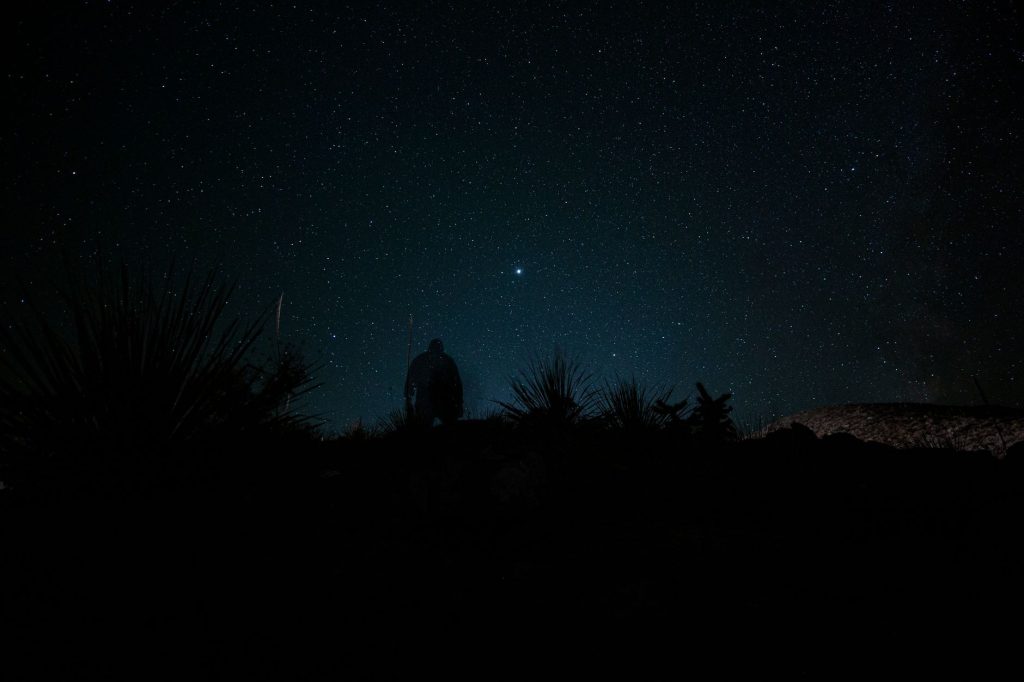
What makes the Roadrunner Planetarium particularly special is its context. Las Cruces sits at the edge of the Chihuahuan Desert, surrounded by some of the darkest skies in the continental United States. The Organ Mountains rise just to the east. The nearest major city is hours away. The night sky here is not a metaphor — it is a legitimate natural resource, and the planetarium functions as a kind of introduction to that resource, a briefing before you step outside and experience the real version.
Go on a night when you have a little extra time afterward. Drive east on Highway 70 toward the Organs, pull off somewhere dark, and look up. What you saw projected on that dome will suddenly make a lot more sense. That combination — the education inside, the experience outside — is hard to replicate anywhere, and it is entirely free once you’ve paid for your ticket.
Las Cruces doesn’t always advertise what it has. The Roadrunner Planetarium is exactly that kind of understated gift: serious science made genuinely accessible, in a city sitting beneath one of the most spectacular night skies in the country. Don’t miss it.