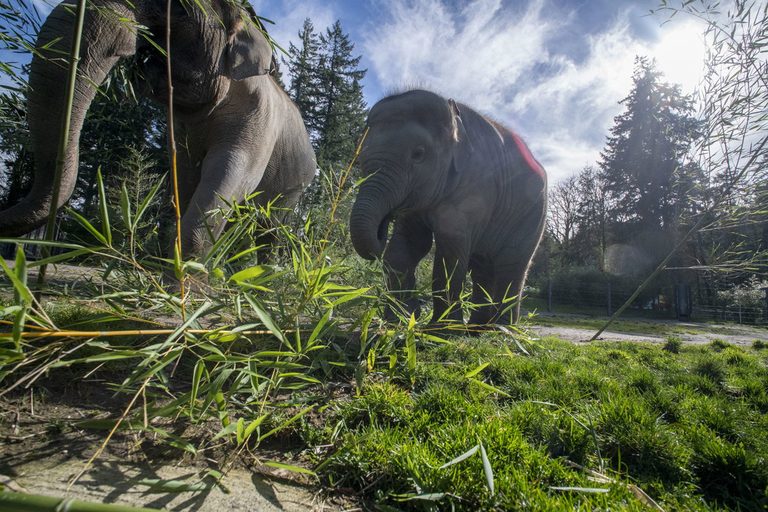
Veterinary staff at the Oregon Zoo in Bend have announced that Tula‑Tu, a 2‑year‑old Asian elephant calf, is showing stable vital signs after a rapid response to an elephant endotheliotropic herpesvirus (EEHV) infection. The zoo’s animal‑health team detected subtle changes in the calf’s behavior and energy on Oct. 24, prompting immediate blood work and a confirmatory test at the Oregon Veterinary Diagnostic Laboratory at Oregon State University.
Early Detection and Immediate Care
Dr. Carlos Sanchez, director of animal health at the Oregon Zoo, explained that routine in‑house blood monitoring allowed technicians to spot a low white‑cell count within hours of the initial observation. “Early detection is critical,” Sanchez said. “We started antiviral medication right away while we awaited molecular testing to confirm EEHV.”
When the diagnostic lab reported an elevated EEHV viral load the next day, the zoo’s veterinary team began plasma transfusions alongside the antiviral regimen. The combination of treatments is designed to reduce viral replication and support the calf’s immune system.
Signs of Improvement
According to Dr. Sanchez, Tula‑Tu’s viral load has remained steady, platelet counts are within normal ranges, and white‑cell numbers are trending upward. “These findings provide grounds for cautious optimism,” he said. “She’s not out of the woods yet, but every hour of stability brings her one step closer to recovery.”
Vaccination Background
Earlier this year, Tula‑Tu became the first elephant on the West Coast to receive an mRNA vaccine targeting EEHV‑1A, the most common strain of the virus. Her current infection is caused by EEHV‑1B, a related but less‑frequently fatal variant. While researchers do not yet know how protective the EEHV‑1A vaccine is against EEHV‑1B, the calf’s response to treatment will help inform future vaccine strategies.
Research and Conservation Impact
Dr. Sanchez chairs the North American EEHV Advisory Group Research Committee and notes that EEHV is a latent virus present in nearly all Asian elephants. Adult elephants usually develop natural immunity, but calves between ages 1 and 8 are vulnerable as maternal antibodies wane. In severe cases, the disease can become fatal within days, as happened in 2018 when a calf named Lily died shortly before her sixth birthday.
The Oregon Zoo has supported EEHV research for nearly a quarter‑century, partnering with Oregon State University and Baylor College of Medicine to analyze vaccine responses using blood samples from Tula‑Tu. Scientists estimate that roughly 200 wild Asian elephants have died from EEHV, underscoring the importance of captive‑based monitoring and treatment.
International Collaboration
Beyond the zoo’s own research, Oregon Zoo veterinarians helped establish Sabah’s first hematology laboratory in Malaysia in 2023, providing training for wildlife officials to track EEHV in both wild and captive populations across Southeast Asia.
“The work we’re doing now could play a significant role in protecting future elephant calves, including those in range countries,” Dr. Sanchez said. “It’s very difficult to study the virus in wild elephants, but zoos can monitor the elephants in their care closely and obtain samples of blood and other fluids.”
Community Support
The local Bend community has expressed strong support for the zoo’s efforts, with many residents following updates on Tula‑Tu’s condition through the zoo’s social media channels. The zoo plans to share further health updates as the calf continues her recovery journey.
Original reporting: KTVZ (Central Oregon) — read the source article.