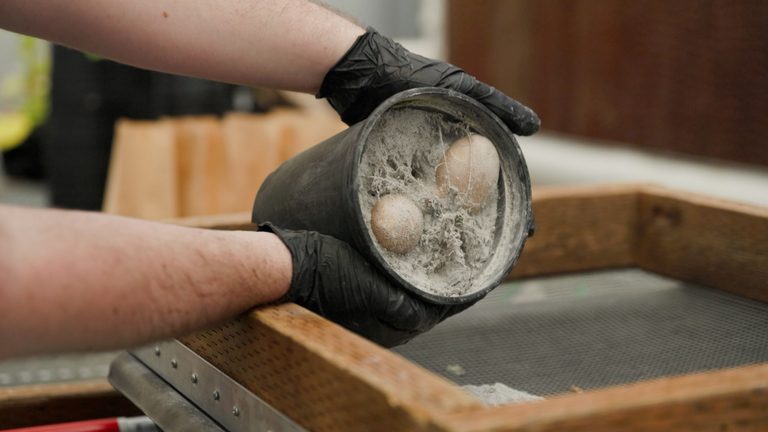
Corvallis, Ore. – Researchers at Oregon State University have demonstrated that potatoes can be grown in simulated lunar soil when the regolith is amended with organic matter. The findings, published in npj Microgravity and funded by NASA, suggest a viable path for local food production on future Moon missions.
Experiment details
Lead scientist Aymeric Goyer, of the Department of Botany and Plant Pathology, explained that the team mixed lunar‑regolith simulants with varying amounts of vermicompost – a nutrient‑rich compost produced by earthworms. When the simulant contained 30% vermicompost, potato plants grew as robustly as those in traditional Earth soil, achieving comparable height, leaf development, and tuber yields.
By contrast, plants grown in simulants without any organic amendment displayed stunted growth and weak root systems. Mixtures with 5% to 15% vermicompost showed only partial recovery, underscoring the importance of a substantial organic component for successful lunar agriculture.
Addressing lunar soil challenges
Lunar regolith is low in organic material and contains elevated levels of heavy metals, making it inhospitable for most crops. The researchers tested five different regolith simulants representing both mare and highland regions of the Moon, as well as a sample of soil from Hermiston, Ore., a region renowned for high potato yields.
Postdoctoral researcher David Handy noted that vermicompost helps mitigate the toxicity of lunar dust, reducing plant exposure to harmful compounds. This protective effect is crucial for ensuring the safety of the harvested food.
Nutrition and safety
Analysis of the harvested potatoes revealed no significant increase in glycoalkaloids, the natural toxins that can appear as green discoloration beneath potato skins. The tubers retained their normal nutritional profile, confirming that the organic amendment does not compromise food quality.
Implications for Artemis and beyond
Potatoes were chosen for the study because they provide a high caloric yield per unit of land and offer essential nutrients for long‑duration space travel. The ability to grow them locally on the Moon could reduce reliance on costly resupply missions from Earth, aligning with NASA’s Artemis program goal of establishing a sustained human presence on the lunar surface.
The research team plans to publish a follow‑up paper evaluating ten different potato varieties in lunar regolith simulants, aiming to identify the most suitable cultivars for future lunar farms.
These results add to a growing body of work exploring how humanity can become more self‑sufficient in space, turning the Moon into a stepping stone for deeper exploration of the solar system.
Original reporting: KTVZ (Central Oregon) — read the source article.