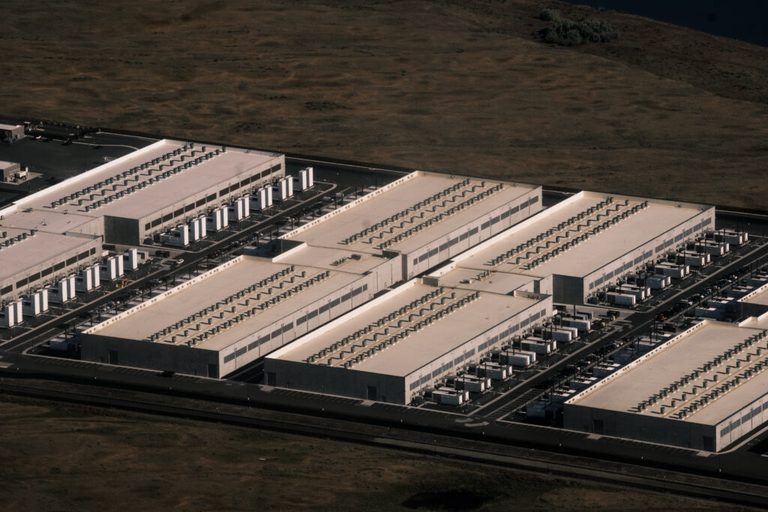
Oregon now holds the second‑largest concentration of hyperscale data centers in the United States, according to a study released in the peer‑reviewed journal Nature Sustainability. Researchers identified 56 facilities across the state, most of them clustered in the eastern half, putting Oregon just behind Virginia’s 142 sites.
Energy demand and emissions
Those 56 centers consumed an estimated 11.1 terawatt‑hours of electricity during the 2024‑25 reporting period – enough to power more than one million American homes for a year. The same period’s carbon footprint was calculated at 1.3 million metric tons of greenhouse‑gas emissions, roughly equivalent to the output of 300,000 gasoline‑powered cars.
While Oregon’s emissions are lower than those of Ohio or Iowa, the study warns that the industry’s reliance on fossil‑fuel electricity could impose health costs on nearby residents, especially when power is drawn from coal‑heavy grids.
State response
Governor Tina Kotek and the Oregon Department of Energy have already signaled a policy response. In October, Kotek ordered state agencies to pause the issuance of environmental permits for new or expanded data‑center projects. The move effectively halted further construction while lawmakers draft longer‑term regulations.
Legislators are expected to introduce bills in the 2027 session that would increase transparency around energy and water use, and tighten eligibility for property‑tax incentives that currently encourage data‑center development. The proposals aim to balance job creation with the state’s climate‑goal commitments.
Local pushback
Umatilla County, home to the majority of Oregon’s hyperscale sites, has filed a lawsuit seeking to lift the governor’s permitting pause. County officials argue that the moratorium harms local economies that depend on data‑center tax revenue and jobs. A recent analysis by consulting firm ECOnorthwest found that 22 of the county’s 22 data centers qualify as hyperscale facilities.
The county’s legal challenge underscores the tension between statewide environmental objectives and local economic interests.
Future research
The Harvard research team plans to expand its work to examine health impacts on communities living near large data‑center clusters. Francesca Dominici, director of the Harvard Data Science Initiative, noted that when data centers draw heavily on fossil‑fuel power, nearby residents may bear indirect health costs even if the facilities themselves are located far from population centers.
Lead author Gianluca Guidi described the study as a “snapshot of a rapidly expanding industry.” He cautioned that the data‑center boom has continued beyond the study period, suggesting that current electricity use and carbon footprints could already be higher in 2026.
What this means for Oregon
Oregon’s leadership faces a balancing act: preserving the economic benefits of a growing high‑tech sector while ensuring the state stays on track to meet its climate targets. The upcoming legislative session will be a key moment for shaping how the state manages the energy and environmental footprint of its data‑center industry.
Original reporting: Homepage – Lookout Eugene-Springfield — read the source article.