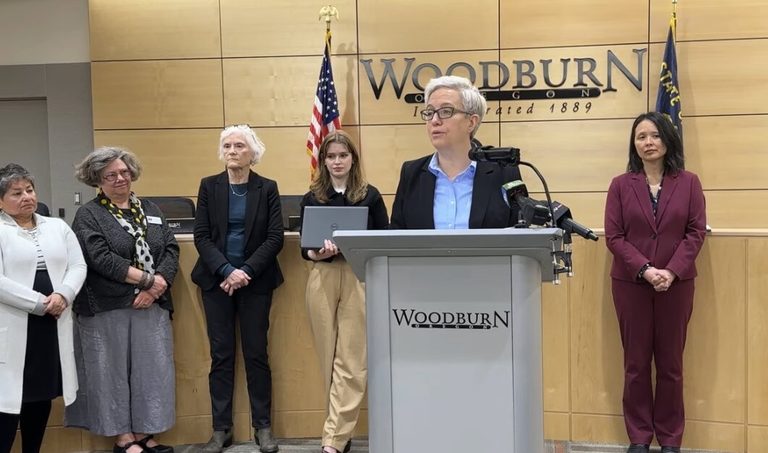
Governor Tina Kotek unveiled a $14.8 million investment Tuesday to jump‑start the preparation of industrial parcels throughout Oregon. The money will flow through the state’s Industrial Site Loan Fund, providing low‑interest loans that enable local governments to install utilities, roads and other infrastructure before a private company shows interest.
Why the funding matters
The loan program is a key component of Kotek’s Prosperity Roadmap, an economic strategy launched in December 2025 to keep businesses in Oregon, spark new job creation and accelerate growth in high‑tech sectors. The state legislature approved the funding during its 2026 session, citing the need to keep Oregon competitive in traded‑sector industries such as manufacturing, food processing, clean technology and semiconductors.
Shovel‑ready land shortage
State data highlight the urgency. A 2024 report from the Oregon Clean Tech Task Force found that roughly 80 % of the state’s industrial land is not shovel‑ready, limiting Oregon’s ability to capture federal clean‑energy investments. A 2026 University of Oregon study echoed the concern, noting that limited industrial acreage is deterring additional semiconductor projects. Surveys by the Oregon Economic Development Association and the League of Oregon Cities reported that more than 80 % of responding jurisdictions missed development opportunities because they lacked ready‑to‑build sites.
How the loans will be used
Participating municipalities can apply for loans to fund essential upgrades—such as water, sewer, power and road improvements—on parcels identified as high‑potential sites. By completing this work in advance, communities can respond quickly when a company expresses interest, making Oregon a more attractive destination for new employers and supporting existing firms that want to expand.
Broader economic agenda
The industrial site loans complement other initiatives rolled out under the Prosperity Roadmap. Since its inception, Governor Kotek has signed legislation to encourage business expansion, created the Prosperity Council for long‑term economic guidance, opened a global trade desk and launched the FastTrack Permitting program to speed up approvals. A full list of projects funded by the loan fund is available on the Business Oregon website.
Local impact
Community leaders across the state welcomed the announcement. “Having shovel‑ready land is essential for attracting good‑paying jobs,” said a Bend city council member who plans to submit an application for a former manufacturing site. Similar enthusiasm was expressed in Portland, Medford and the Columbia River Gorge, where local officials see the loans as a catalyst for revitalizing underused industrial zones.
Governor Kotek summed up the administration’s vision: “Oregon is open for business, and that means ensuring we have the shovel‑ready land needed to welcome new opportunities for more good‑paying jobs. This is good news for communities across the state, but the need for more shovel‑ready industrial land is abundantly clear and the work isn’t over. Let’s keep going.”
As the loan fund begins disbursing funds, municipalities are expected to prioritize projects that align with the state’s clean‑technology and semiconductor goals, reinforcing Oregon’s reputation as a hub for innovative manufacturing and sustainable industry.
Original reporting: KTVZ (Central Oregon) — read the source article.