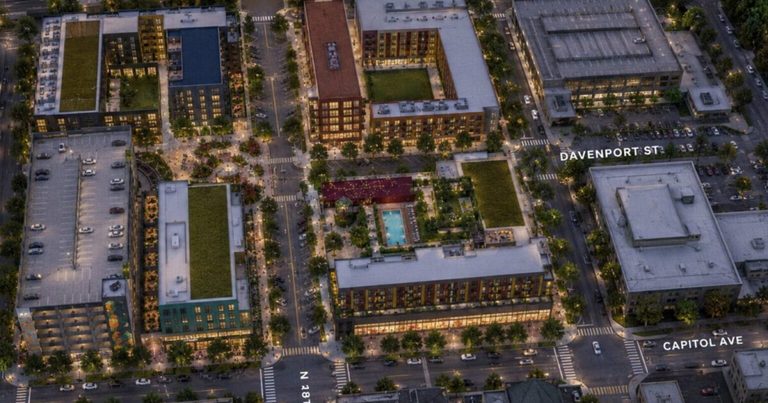
After a protracted legal battle between the city and private developer White Lotus Group, Omaha’s Planning Board gave the green light to a crucial financing request on Wednesday. The board voted 6‑0 to recommend $34 million in tax‑increment financing (TIF) for the Civic Corner project, a $323 million mixed‑use development on the former Civic Auditorium site.
Project overview
The eight‑acre downtown parcel, cleared for development a decade ago, is slated to become a vibrant hub known as Civic Square, or “The Nest” among Creighton University students. The plan calls for roughly 380 apartments, 30 for‑sale condos, a 120‑room hotel, 125,000 sq ft of office space and 150,000 sq ft of retail, including a grocery store and fitness center. The developer estimates the project will create about 80 new jobs.
Financing and legal context
TIF is a legislatively created tool that diverts future property‑tax revenue from a designated site for up to 20 years to help cover eligible development costs. The $34 million request is integral to the project’s budget and now moves to the City Council for final approval.
The financing request follows a September 2025 notice of default issued by the city, which claimed the developer had not met construction milestones. White Lotus Group disputed the claim and filed suit in January. A judge’s ruling in August cleared the default, allowing the TIF application to proceed.
Local officials weigh in
Planning Board member David Rosacker praised the plan as “well‑conceived,” noting its potential to activate a long‑vacant downtown block that once hosted the Shrine Circus, graduations, concerts and political rallies. Board Chair Michael Pate echoed that sentiment, emphasizing the project’s appeal to young talent and Creighton University’s Bluejays.
Deputy City Attorney Jennifer Taylor explained that the earlier default notice was the primary reason the TIF committee denied the request last September. With the default withdrawn, the city removed a cloud over the title, enabling the board’s recommendation.
Developer’s perspective
White Lotus founder Arun Agarwal told the board the site is “critical to the urban core of the state’s most populated city.” He highlighted the developer’s experience, citing the recent transformation of Lincoln’s former Pershing Center into a mixed‑use hub. Agarwal said the first phase will feature 120 apartments, a mix of low‑ to moderate‑income and market‑rate units, with street‑level retail to energize the area.
The developer projects the completed site will add nearly $210 million in property‑tax value and anticipates full completion by 2032. Agarwal noted a competing proposal from Omaha Public Schools, backed by the Sherwood Foundation, but declined to discuss ongoing litigation.
Next steps
The Planning Board’s recommendation now heads to the City Council, where council members will decide whether to allocate the $34 million TIF. If approved, the financing will support infrastructure work slated to restart next spring or summer, followed by vertical construction of the first‑phase buildings.
Community members and local businesses are watching closely, as the project promises to revitalize a historic downtown block, provide new housing options and generate employment opportunities for Omaha residents.
Original reporting: KMTV 3 News Now (Scripps) – local — read the source article.