Oklahomans looking for a night‑time wonder should plan to step outside this week. Two meteor showers will be visible across the state, offering a rare opportunity to watch both the Northern Taurids and the Leonids without any special equipment.
Northern Taurids fireball display
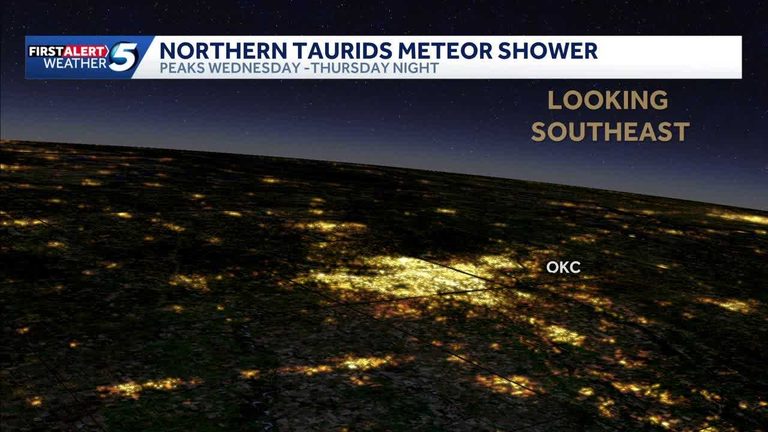
The first shower, known as the Northern Taurids, earned the nickname “fireballs” because its larger debris creates bright, long‑lasting streaks across the sky. The peak began Wednesday night and will continue through Thursday evening. The best viewing window is from 8 p.m. to midnight on Thursday, when the meteors appear on the southeast horizon. Look toward the constellation Taurus for the brightest activity.
Leonids peak early in the week
The second shower, the Leonids, will reach its peak on Tuesday and Wednesday nights. Observers should aim for the period between midnight and about 5 a.m. to catch the most meteors. Because the Leonids’ peak occurs close to the Taurids’ tail end, there is a chance for a brief overlap, giving skywatchers an extended display.
How to see the showers
No telescopes, binoculars, or special gear are required. A simple pair of eyes, patience, and a location away from city lights will provide the best conditions. Find a dark spot—such as a rural field, a park, or a backyard with minimal street lighting—and give your eyes about 15‑20 minutes to adjust to the darkness.
Moonlight will not be a problem this week; the moon will set early enough on Thursday to keep the sky dark for the Taurids, and it will be well below the horizon during the Leonids’ peak hours.
Local weather outlook
Weather forecasts for the region indicate clear skies on the nights of the peaks, with only light winds and no precipitation expected. This should make for optimal viewing conditions throughout Oklahoma.
Why the showers matter
Both meteor showers are annual events, but the coincidence of their peaks within a single week is unusual. The Northern Taurids are associated with the larger, slower‑moving debris from Comet Encke, while the Leonids originate from Comet Tempel‑Tuttle. Watching them together offers a unique glimpse of the solar system’s dynamic nature.
For those interested in learning more, local astronomy clubs often host informal viewing gatherings. Check community bulletin boards or social media groups for any scheduled meet‑ups.
Enjoy the celestial show, and remember to keep your eyes on the heavens while staying safe and respectful of your neighbors.
Original reporting: Oklahoma City News Feed (HLL/CB) — read the source article.