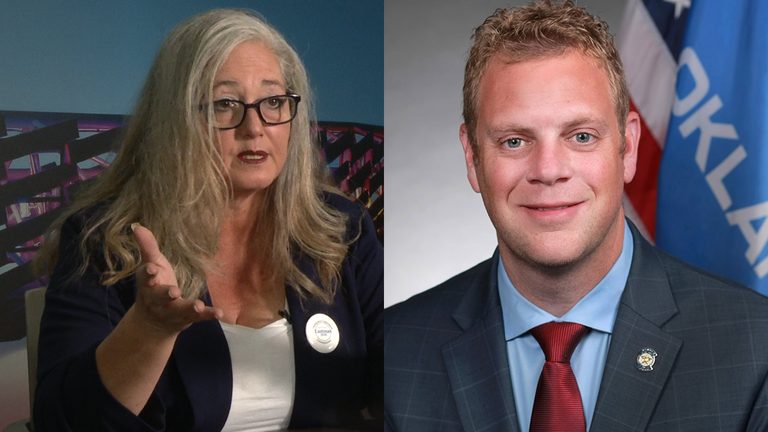
Oklahoma voters will decide who fills the vacant seat on the Oklahoma Corporation Commission in the November general election. The race has become a focal point for discussions about ratepayer protection as the state’s energy demand surges.
Candidate backgrounds and priorities
Republican state Representative Brad Boles brings experience from his tenure as chair of the Energy and Natural Resources Committee. Boles says his record shows he is “pro‑energy, pro‑business, but also ratepayer protection.” He emphasizes a balance between keeping utility rates low, ensuring grid reliability, and maintaining a diverse energy mix.
Democratic challenger Rhonda Eastman is a political newcomer who frames her campaign around honesty and public service. Eastman stresses the need to protect the environment while keeping rates affordable, stating that “protecting the land and water is the most critical, important thing you can ever do.”
Energy demand and the role of large consumers
Both candidates agree that Oklahoma is experiencing unprecedented demand on its electric grid. Boles notes, “We’re seeing a demand like we’ve never seen on our grid,” while Eastman attributes the surge primarily to industrial growth rather than population increases.
Eastman expressed particular concern about large‑scale energy consumers such as data centers, especially in rural areas, saying, “When you pick and choose to live in a rural area, you choose that. They don’t choose to be industrialized.” Boles clarified that he is not opposed to data centers, but he wants statutory protections to prevent ratepayers from bearing higher costs.
Regulatory limits and legislative cooperation
Both candidates recognize that the Corporation Commission operates within the bounds of state law. Boles explained, “The Corporation Commission has to go by state statute. They don’t just get to create their own rules,” and Eastman added, “We can push back against those laws, we can advocate, but we still have to make a decision based on the laws that exist.”
What voters can expect
Voters seeking a candidate who prioritizes low utility costs and grid reliability may find Boles’ emphasis on proven Oklahoma performance appealing. Those who prioritize environmental stewardship alongside affordable rates may be drawn to Eastman’s platform.
Both candidates say they will continue to fight for the people throughout the campaign and beyond, promising to keep Oklahoma’s energy future both affordable and reliable.
Election logistics
Oklahoma’s primary election is scheduled for August 27, with the general election on November 5. Voters can find polling locations, absentee ballot information, and early voting options on the state’s election website. The Corporation Commission seat is one of several statewide races on the ballot.
Original reporting: Oklahoma City News Feed (HLL/CB) — read the source article.