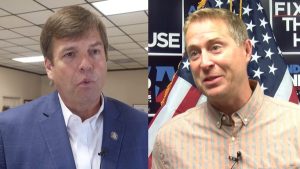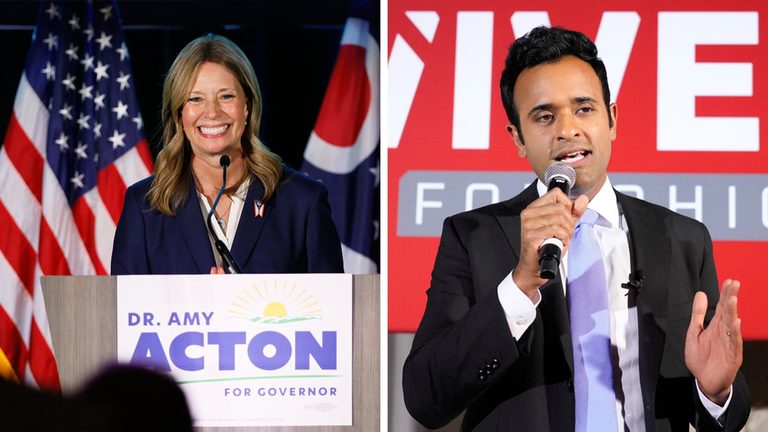
Columbus, Ohio – Ohio voters will head to the polls on Tuesday to choose the next governor in a race that could reshape the state’s political landscape. The contest features two political newcomers: Republican biotech billionaire Vivek Ramaswamy, who has earned the endorsement of President Donald Trump, and Democratic former health director Dr. Amy Acton, who seeks to become the first woman and first Democrat to hold the office in two decades.
Campaign finances and fundraising
Both campaigns have broken spending records, with total expenditures topping $100 million. Ramaswamy and his allies have out‑raised and out‑spent Acton, yet the race remains competitive. Acton’s fundraising surged after Ramaswamy aired a controversial television spot that featured her estranged mother, Donna Arthur, accusing Acton of dishonesty. The ad, which quickly drew criticism from politicians across the country, was defended by Ramaswamy as a legitimate critique of Acton’s record.
Policy contrasts
Ramaswamy is positioning his business success as a blueprint for Ohio’s future. He proposes eliminating the state income tax, reducing property taxes, cracking down on Medicaid fraud, and requiring AI data centers to cover the electricity costs of nearby residents. Acton, drawing on her experience as the state’s health director during the COVID‑19 pandemic, emphasizes tax credits for middle‑ and lower‑income families, increased funding for schools, and lower health‑care costs. She also calls for any new data centers to use union labor, pay their own utility bills, and protect farmland.
Backlash and endorsements
The ad featuring Acton’s mother sparked a bipartisan outcry. President Trump and Vice President J.D. Vance publicly defended Ramaswamy, with the president expressing a rare jealousy that he had never had the chance to run a similar attack. In contrast, Ohio Governor Mike DeWine condemned the advertisement and urged Ramaswamy to withdraw it. DeWine, who originally appointed the late‑term lieutenant governor Jon Husted to the U.S. Senate, has previously sided with Acton on pandemic‑related issues.
Republican dynamics
Ramaswamy’s candidacy energized Ohio Republicans, many of whom rallied around his high‑profile campaign and close ties to President Trump. However, the endorsement of a political newcomer caused some veteran Republicans, including the state attorney general and treasurer, to reassess their own plans. The primary also featured a notable challenge from Casey “The Car Guy” Putsch, a vehicle designer and YouTube personality who captured nearly 18 % of the Republican primary vote.
Democratic consolidation
Acton ran unopposed in the Democratic primary, consolidating support after initial hesitation from party leaders who awaited a decision from former Senator Sherrod Brown. Her name recognition from leading Ohio’s COVID‑19 response helped her secure the nomination quickly. Libertarian candidate Donald Kissick, a Navy veteran, also appears on the general‑election ballot.
What’s at stake
The outcome will determine whether Ohio continues on a path of aggressive tax cuts and deregulation championed by Ramaswamy, or adopts Acton’s focus on targeted tax relief, education funding, and health‑care affordability. Rural counties, which have shifted strongly Republican since President Trump’s arrival on the national stage, will be pivotal, as both campaigns are courting voters concerned about data‑center development, gas prices, and foreign policy issues such as the war in Iran.
As Ohio prepares for a decisive November vote, the race underscores the growing influence of national political figures in state contests and highlights the stark policy choices facing voters in the Buckeye State.
Original reporting: 13abc WTVG Toledo (news) — read the source article.