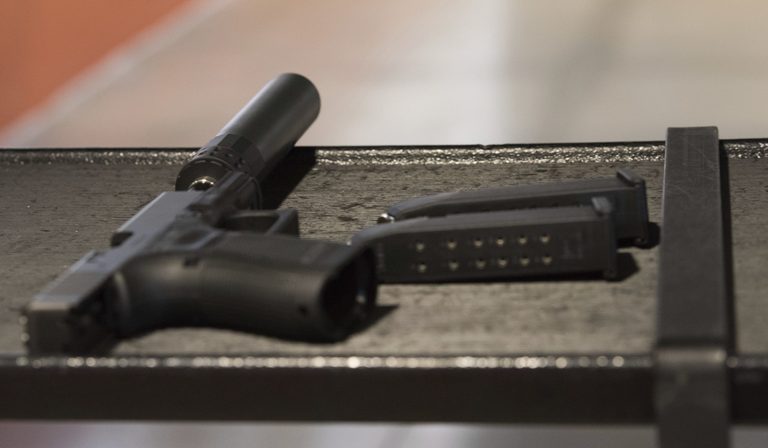
Columbus, Ohio – In a decisive partisan vote on Tuesday, Ohio’s House and Senate passed Senate Bill 214, a bill that removes the $200 federal registration fee for gun silencers, short‑barreled rifles and short‑barreled shotguns, including sawed‑off shotguns. The legislation now awaits Governor Mike DeWine’s signature.
Why the Change Matters
Current Ohio law classifies these firearms as “dangerous ordnance,” requiring owners to undergo a special federal background check and pay a $200 tax before registration. Republicans and gun‑rights advocates argue that the extra fee is a needless duplication of the federal process and an unconstitutional barrier to the constitutional right to keep and bear arms.
Rep. Kellie Deeter (R‑Lorain County) emphasized that suppressors are primarily tools for hearing protection, not stealth devices. Rep. Tex Fischer (R‑Mahoning Valley) rejected Democratic claims that looser gun laws increase violence, stating, “This is in no way shape or form anything that’s going to make Ohio less safe.”
Legislative Context
The bill follows a two‑decade trend of Ohio Republicans gradually easing restrictions on firearms. Notable milestones include the 2021 “stand‑your‑ground” law and the 2022 “constitutional carry” law, which eliminated training, background‑check, and permit requirements for concealed carry.
SB 214 aligns Ohio law with recent federal developments that have already reduced the registration tax to zero. President Donald Trump’s 2025 One Big Beautiful Bill Act eliminated the $200 tax nationwide, a move the Trump administration defended as a restoration of lawful gun ownership. The Department of Justice, under Trump’s leadership, chose not to appeal a Texas judge’s ruling that the tax was unconstitutional, prompting the ATF to stop enforcing the registration requirement for silencers and short‑barreled firearms.
Support and Opposition
While all Republicans voted for the bill, a handful of Democrats opposed it. Democrat Darnell Brewer, a Cleveland‑area legislator, warned that expanding gun access ignores the reality of gun violence, noting a recent shooting that occurred steps from his home. Senate Minority Leader Nickie Antonio (D‑Lakewood) called the deregulation “out of step with voters’ demands for leaders to focus on the cost of living.”
However, some Democrats broke ranks. Rep. Mark Sigrist (D‑Columbus area) described the measure as a “limited adjustment” that simply brings Ohio law into compliance with federal changes and safeguards Second Amendment rights for responsible citizens.
Enforcement and Statistics
Violations of Ohio’s dangerous‑ordnance statutes are rare. In 2025, the Legislative Service Commission recorded 26 possession incidents and 16 concealed‑carry incidents, though these figures may be under‑reported due to voluntary police reporting.
Nationally, the ATF reports roughly 1.3 million short‑barreled rifles, 211,000 short‑barreled shotguns, and 6.9 million silencers are registered. Ohio’s move to eliminate the state‑level tax aligns the state with this broader national landscape.
Looking Ahead
Attorney General Andy Wilson, serving on an interim basis, noted that Ohio law still requires federal registration for short‑barreled firearms. He suggested that if lawmakers view these requirements as “archaic remnants of an overly restrictive past,” it is time to remove them entirely.
The bill now heads to Governor DeWine, who is expected to sign it into law, further cementing Ohio’s commitment to protecting lawful gun owners while maintaining public safety through existing background‑check mechanisms.
Original reporting: Signal Cleveland — read the source article.