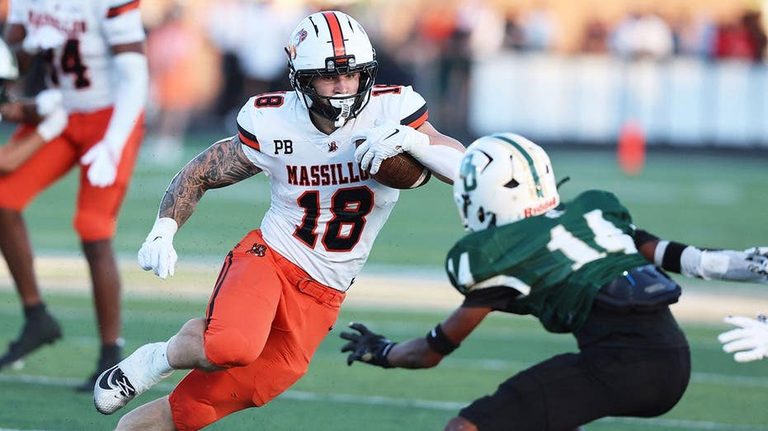
Massillon, Ohio – The Feister brothers, Brayton and Brydon, found themselves at the center of a legal and athletic controversy this week. After transferring from Archbishop Hoban High School in Akron, the siblings were initially deemed ineligible for the D‑II regional final against Bishop Watterson. A Court of Appeals injunction on Oct. 16 reversed that decision, allowing the brothers to suit up for the playoff game, which Massillon ultimately lost 22‑5.
Background on the transfer
The brothers moved to Massillon last spring following a disciplinary dispute at Hoban that stemmed from the state wrestling tournament in March. According to filings with the Ohio High School Athletic Association (OHSAA), the family declined to complete the prescribed disciplinary consequences and relocated a month later. OHSAA attorney Joseph Fraley noted that the family had been in contact with multiple schools about possible enrollment.
Ohio transfer rules and the eligibility question
Under OHSAA policy, athletes who transfer must sit out the second half of the season and the playoffs unless they qualify for an exception, such as a legitimate family relocation. The association must determine that the move was not primarily for athletic reasons, and schools must submit documentation to support the claim.
In the Feisters’ case, the OHSAA initially denied eligibility, prompting the family to seek judicial relief. The appeals court’s injunction permitted the brothers to play, but the association later suspended them for up to 30 days while it investigated possible recruiting violations.
Recruiting investigation and property purchases
The investigation, reported by the Canton Repository, focuses on three large purchases made by the family: a $360,000 house in Massillon purchased without a recorded mortgage, a $238,655 residence in Green, Ohio bought the prior year with a $226,722 mortgage, and two Dodge vehicles (a Charger and a Durango). Public records confirm these transactions, though the OHSAA has not yet issued a final finding on whether the family received improper benefits.
Bo Feister, the brothers’ father, told News 5 that the family has submitted 18 rounds of documentation—including deeds, titles, and bank statements—to the OHSAA and accused the association of harassing his family. In a November 5 Facebook post, Feister claimed a black‑truck driver was following his family under OHSAA direction, describing the situation as “devastating” for his children.
Legal developments
Hours before Friday’s playoff game, an appeals court reaffirmed its earlier order, allowing the brothers to play and directing the OHSAA to explain why it should not be held in contempt for its handling of the case. The court’s decision underscores the tension between athletic governing bodies and families asserting their rights under the law.
Broader context
This episode reflects a growing national conversation about high school athletics, transfer portals, and the impact of name‑image‑likeness (NIL) deals on amateur sports. Critics argue that the influx of out‑of‑area talent and lucrative NIL opportunities undermine the traditional community‑based nature of high school football. Supporters contend that families should have the freedom to seek the best educational and athletic opportunities for their children, provided they follow established rules.
For Massillon fans, the controversy has sparked debate about fairness, parental rights, and the role of state athletic associations. While the OHSAA continues its investigation, the Feister brothers remain eligible to compete pending any further rulings.
Original reporting: Fox News (HLL/CB) — read the source article.