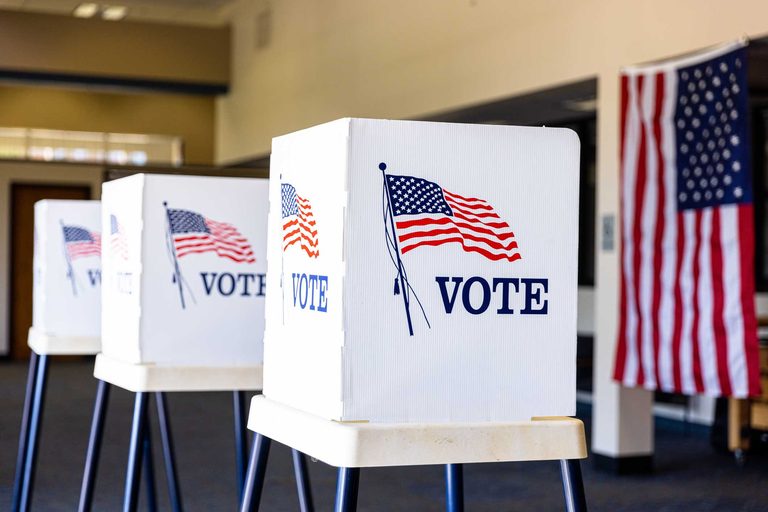
Ohio has reached a historic early‑voting milestone, with more than one million ballots submitted just 11 days before Election Day, according to the Ohio Secretary of State’s Office. The total of 1,004,060 ballots puts the state on track for an all‑time record for early turnout in a midterm election, surpassing the comparable point in the 2022 cycle.
Early‑Vote Participation by Method
Roughly 58 percent of the early voters chose to cast their ballots in person at regional Board of Elections offices, while the remaining 42 percent voted by mail. This balanced mix of in‑person and mail voting reflects the accessibility of Ohio’s voting system and the enthusiasm of its electorate.
Party Affiliation Breakdown
Among the ballots cast, Democratic‑affiliated voters have outpaced Republican‑affiliated voters by about 18 percent. The Secretary of State’s data shows 317,197 ballots from Democratic voters compared with 268,939 from Republican voters. Historically, Republican primary voters have outnumbered Democrats in every election cycle since 2008, including a margin of nearly 100,000 in the May GOP primary this year. The current early‑vote gap therefore highlights a notable surge in Democratic enthusiasm.
However, the early advantage does not guarantee a final outcome. In the 2020, 2022 and 2024 elections, Democratic primary voters were more likely to use early‑voting methods, yet Republicans captured statewide races in those years. Analysts note that a strong Republican turnout on Election Day could narrow or reverse the current lead.
Unaffiliated Voters – The Decisive Bloc
Unaffiliated voters represent the largest single group in Ohio’s early‑vote picture, with 404,755 ballots cast by voters who did not participate in a recent primary. Because these voters are not tied to a party, they are expected to play a pivotal role in determining the outcomes of the governor’s race, the Senate contest, and other statewide contests.
Geographic Trends
Democratic early‑vote strength is evident in several counties that supported President Trump in 2024. In the seven counties carried by former Vice President Kamala Harris, Democratic turnout leads Republican turnout by wide margins. Notable examples include Athens County, where Democratic voters outnumber Republicans by a factor of 3.5, and the urban counties of Hamilton, Montgomery, Lucas, and Summit, where Democratic early‑vote totals are at least twice those of Republicans.
In Ohio’s two largest counties—Franklin (home to Columbus) and Cuyahoga (home to Cleveland)—Democratic early‑vote numbers are roughly three times higher than Republican numbers, despite President Trump’s strong performance in those areas in 2024.
Rural and some suburban counties, such as Butler, Warren, and Clermont, continue to show solid Republican support, helping to offset the Democratic advantage in urban centers.
Age Demographics
Age remains a clear factor in early voting. Voters aged 65 and older account for 57.6 percent of all ballots cast, rising to 77.6 percent when the 55‑plus group is included. By contrast, voters under 35 represent only 7.5 percent of the early‑vote total. This pattern mirrors national trends of higher turnout among older citizens.
What This Means for Election Day
The early‑vote data suggests a highly engaged electorate, with strong Democratic enthusiasm and a sizable unaffiliated bloc that could swing the final results. While Republicans have been narrowing the early‑vote gap each day, the ultimate outcome will depend on turnout on Election Day, especially among older voters and those in rural counties.
Ohio’s record‑setting early voting underscores the importance of every citizen exercising their constitutional right to vote. As the state moves toward Election Day, both parties will be watching the remaining days of early voting closely, hoping to translate early enthusiasm into final victories.
Original reporting: WLWT Cincinnati — read the source article.