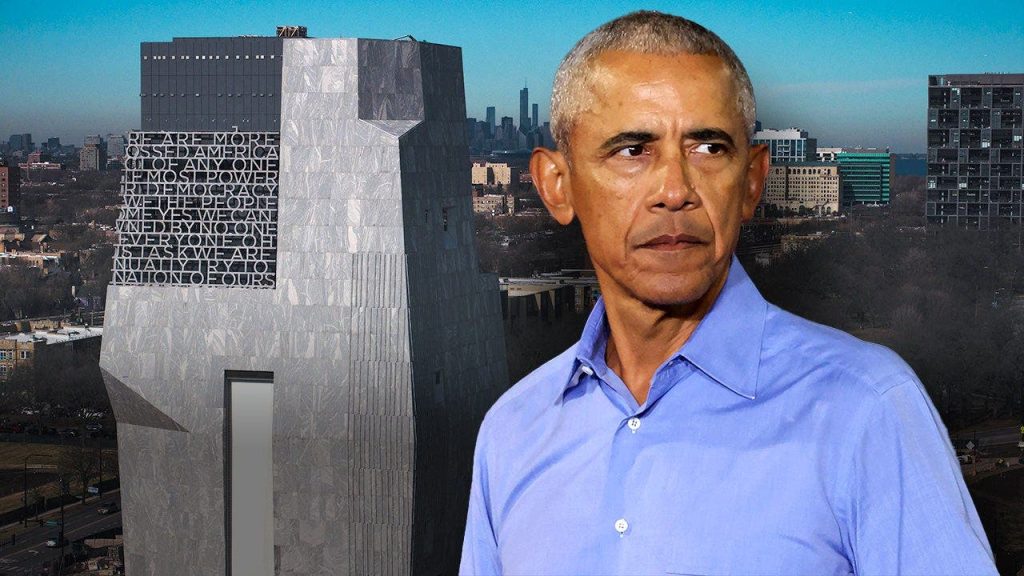
Former President Barack Obama and President Donald Trump traded public lines about UFOs and possible extraterrestrial evidence this spring, with Obama dismissing secrecy claims on The Late Show with Stephen Colbert and Trump promising document releases after a Phoenix rally and comments involving Secretary of War Pete Hegseth; Brian Tyler Cohen’s earlier podcast remark by Obama also reignited the debate. The back-and-forth has pushed the issue into a familiar political theater: one side urges transparency and file releases, the other shrugs at conspiracies. Names, places, and direct quotations figure heavily in the discussion.
Barack Obama told Stephen Colbert he thinks the government would have a hard time hiding verifiable evidence forever. “One of the things you learn as president is the government is terrible at keeping secrets,” he said, using a plain observation about bureaucracy to push back against sweeping conspiracy claims. That line landed with people who remember leaks and whistleblowers, and it was meant to undercut the idea of a grand, ironclad cover-up.
Obama went further with a blunt image about how a secret would leak. “I promise you, some guy guarding the installation would have taken a selfie with one of the aliens and sent it to his girlfriend,” he said, which is both amusing and meant to be persuasive in a simple way. It’s the kind of practical logic that appeals to an audience skeptical of cloak-and-dagger narratives but annoyed by headline-chasing mythology.
But this wasn’t the only moment that stirred conversation. On Brian Tyler Cohen’s podcast Obama had said, “They’re real, but I haven’t seen them,” and that short sentence went viral, pushing critics and supporters to parse what he meant. He later tried to clarify on Instagram: “Statistically, the universe is so vast that the odds are good there’s life out there. But the distances between solar systems are so great that the chances we’ve been visited by aliens is low, and I saw no evidence during my presidency that extraterrestrials have made contact with us. Really!” That clarification kept the door open to life beyond Earth while closing it on any claimed presidential encounter.
Not everyone accepted Obama’s take, and that’s where politics sharpened the angles. Donald Trump took the viral moment as leverage to promise action, telling a Phoenix rally the first releases from a Pentagon UFO study would be coming “very soon.” He played to a crowd that loves a reveal and a good show, and his timing made the topic a campaign-relevant talking point rather than a mere science curiosity.
At the rally Trump joked and teased the audience: “I figured this was a good crowd because I know you people. You’re really into that. I don’t know if I am,” and the crowd responded to the mix of skepticism and spectacle. Then he reportedly discussed the matter with Secretary of War Pete Hegseth, saying they had found “many, very interesting documents.” That phrasing is exactly the kind of teaser that keeps people waiting and speculation alive.
Trump also issued a more formal-sounding directive after Obama’s comments: “Based on the tremendous interest shown, I will be directing the Secretary of War, and other relevant Departments and Agencies, to begin the process of identifying and releasing Government files related to alien and extraterrestrial life, unidentified aerial phenomena (UAP), and unidentified flying objects (UFOs), and any and all other information connected to these highly complex, but extremely interesting and important, matters.” That pledge reads like transparency theater but could force agencies to reckon with classified archives.
The contrast between Obama’s skeptical shrug and Trump’s promise of declassification highlights a Republican appetite for pulling back curtains. Conservatives pushing for accountability see releasing files as a straightforward way to test claims, reduce rumor, and let citizens make up their own minds. It fits a broader posture: when rumors swirl, put papers on the table and let sunlight do the work.
There is a practical side to this, too. Even modest declassifications can reveal how agencies evaluated sightings, which protocols they used, and what intelligence constraints shaped their conclusions. That kind of bureaucratic paper trail can be revealing in ways that spin and rhetoric are not, and it gives ordinary people material to analyze rather than relying on leaked clips or secondhand takes.
Obama’s quips about being a good emissary also slipped into the conversation and offered a human touch. “First contact, I think I would be a good emissary for the planet,” he said. “I’ve got some experience at statecraft and diplomacy. I’m friendly. So, I actually think I could do a pretty good job.” It’s a wink that humanizes the debate, but it doesn’t answer whether any credible evidence exists, which leaves room for questions about how the government handles sensitive information.
For now the political theater will continue: viral podcast moments, late night interviews, rally teases, and promises to hunt down paperwork. Whatever people believe about UAPs and UFOs, the demand from Republican voices will be clear — bring forward the documents, stop the paranoia, and let citizens judge what the evidence actually says.
Trump after Obama’s initial alien comments, and that token remains part of the public exchange that keeps this topic in the headlines and in campaign conversations.
https://x.com/WhiteHouse/status/2024654469745480105