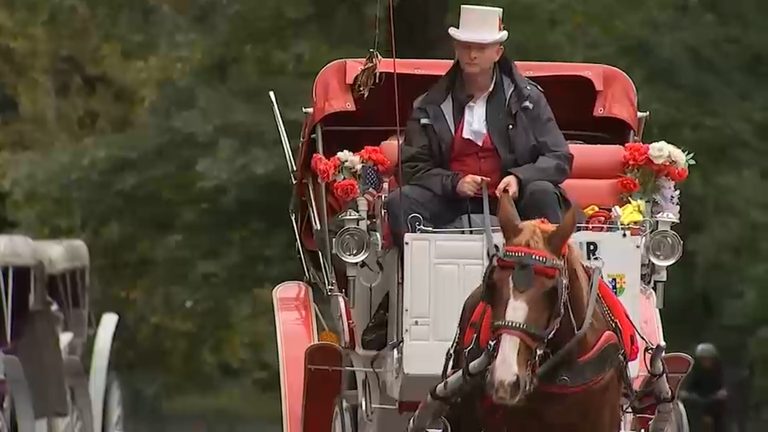
New York City is taking concrete steps to protect the livelihoods of horse‑carriage drivers, stable hands and medallion owners as the administration prepares to phase out the historic carriage industry. Mayor Zohran Kwame Mamdani announced a comprehensive transition framework that pairs direct financial aid for medallion owners with robust career‑training services for the workers most affected.
Key components of the transition plan
The plan, which will be finalized by April 2027, includes:
- Financial buy‑back options for medallion owners, ensuring they receive fair market value for their assets.
- A dedicated Horse Carriage Worker Industry Program administered by LaGuardia Community College and supported by the Department of Small Business Services.
- Career counseling, job‑training courses, tuition assistance and direct connections to employers for an estimated 200 workers.
“As New York City moves to bring the horse‑drawn carriage industry to a close, we have a responsibility to the workers who have built careers in this industry,” Mayor Mamdani said. “This administration will not leave them behind. Our transition plan will provide financial support and pathways to new careers through training, career guidance and education. We will support workers every step of the way.”
Collaboration with labor and education partners
The city will work closely with the Transport Workers Union and other stakeholder groups to shape the buy‑back process and ensure that workers receive the protections they need. Kenneth Adams, president of LaGuardia Community College, emphasized the college’s commitment: “LaGuardia will work with each carriage driver and stable hand to ensure they get the workforce training they need to transition to new careers with family‑sustaining wages.”
Exploring future transportation alternatives
Mayor Mamdani also directed city officials to study whether electric carriages and electric pedal‑assist bicycles could serve as environmentally friendly alternatives in and around Central Park. While the legislation that would ban horse‑drawn carriage rides within two years—known as Romanch’s Law—has already cleared the City Council with a 40‑7 vote, the mayor is seeking safeguards that protect workers before the ban takes effect.
Legislative backdrop
Romanch’s Law, named after a teenager who tragically lost his life after a horse became startled in Central Park, enjoys the mayor’s support in principle. However, Mamdani has stressed the need for comprehensive worker protections before the final implementation.
By pairing financial assistance with education and job placement, the administration aims to turn a potentially disruptive industry shift into an opportunity for workers to secure stable, well‑paid employment in growing sectors of the city’s economy.
What this means for families
For the families of carriage workers, the plan promises a smoother transition that maintains household income while opening doors to new career paths. The emphasis on “family‑sustaining wages” reflects the city’s broader commitment to supporting traditional families and preserving economic stability in neighborhoods that have long relied on the carriage industry.
City officials will continue to refine the program details over the coming months, with input from labor representatives, community leaders and local businesses eager to hire trained workers.
Original reporting: Brookhaven News – ABC7 New York — read the source article.