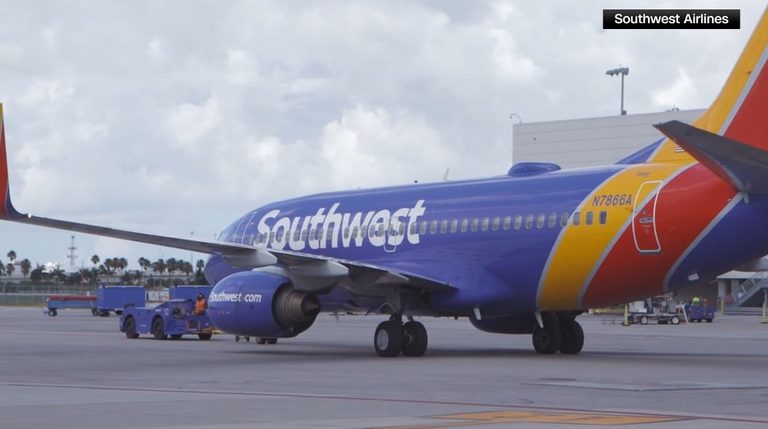
Federal investigators released a detailed NTSB report on Thursday explaining how a Southwest Airlines Boeing 737 Max 8 suffered tail damage that went undetected until the aircraft entered a dangerous “Dutch roll” on a Phoenix‑to‑Oakland flight on May 25, 2024.
Wind‑related damage went unnoticed
According to the report, the jet was parked overnight in New Orleans on May 16, 2024, when thunderstorms produced gusts up to 84 mph. The strong winds likely moved the rudder and damaged the internal structure of the tail fin that houses the backup rudder system.
Southwest pilots flew the aircraft 38 times after the storm with no reported rudder problems, so the damage remained hidden.
Maintenance missed the fault
On the evening of May 23, the plane underwent scheduled maintenance. Mechanics failed to notice that the rudder was out of position and signed the aircraft off as airworthy.
The following day, pilots reported odd behavior from the “yaw damper,” an automatic system that makes tiny rudder adjustments to keep the tail steady. The crew disabled the system and continued the flight.
Dutch roll at cruising altitude
At about 2:45 p.m. on May 25, while cruising at 34,000 feet, the aircraft entered a Dutch roll—a rhythmic swaying motion that combines yaw and wing‑tip rocking. The motion persisted after the plane descended to 32,000 feet. The pilots safely landed the jet in Oakland.
All six crew members and 175 passengers were unharmed.
Recommendations for future safety
The NTSB highlighted two key preventive measures: adding a minimum wind‑speed threshold to Boeing’s inspection manual for parked aircraft, and requiring Southwest to implement a system that alerts mechanics when a plane may have been exposed to extreme winds while on the ground.
These steps aim to ensure that similar damage is identified before a flight, protecting passengers and crews from repeat incidents.
The Associated Press contributed to this report.
Original reporting: azfamily KTVK/KPHO Phoenix (news) — read the source article.