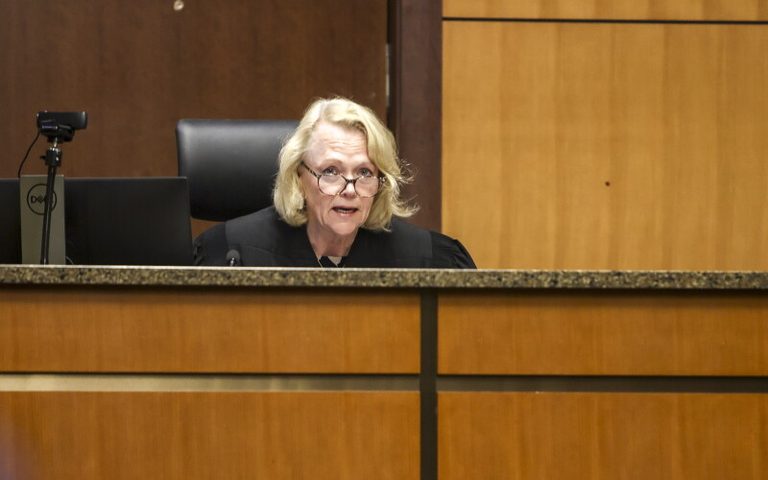
The North Dakota Supreme Court this week reversed a Cass County district‑court order that awarded St. Paul’s Newman Center a $325,000 judgment against Georgia‑based pipe‑organ specialist P.J. Swartz Inc. and its owner, Philip Swartz. The high court found that Judge Constance Cleveland had overstepped her authority by adopting the plaintiff’s proposed order verbatim, despite acknowledging errors in the document.
Supreme Court cites abuse of discretion
In a unanimous opinion authored by Justice Jerod Tufte, the court held that Judge Cleveland “abused the court’s discretion” by applying standards not supported by the cases she cited in her January ruling. The opinion emphasized that a judge must conduct a rigorous analysis before signing a party‑drafted order, especially when the drafting party’s citations are questionable.
Background of the organ dispute
St. Paul’s Newman Center, a Catholic campus ministry in Fargo, contracted with P.J. Swartz Inc. in 2022 to refurbish the historic organ at its worship space. The Center transferred more than $200,000 for the work, but the organ was delivered in August 2024 unfinished and inoperable. The Center sued for breach of contract, and when Swartz failed to respond, Judge Cleveland entered a default judgment in August 2025 awarding the Center the $325,000 sum.
Swartz’s attempt to vacate the judgment
In early 2025, Swartz and his company filed a motion to vacate the default judgment, claiming that Swartz had suffered a cognitive decline since 2022 that prevented him from responding to the lawsuit. Judge Cleveland rejected the motion, finding the evidence of incapacity insufficient and noting that Swartz continued business activities after the alleged onset of his mental decline.
Supreme Court’s corrective action
The state Supreme Court sent the case back to Judge Cleveland for further proceedings, specifically to reconsider Swartz’s motion to vacate. The court clarified that the default money judgment itself was not appealed and therefore remains intact.
Why the ruling matters for local justice
By insisting that judges independently verify the accuracy of proposed orders, the Supreme Court reinforces the integrity of North Dakota’s judicial process. The decision underscores the importance of thorough legal analysis over procedural shortcuts, a principle that protects both taxpayers and local institutions from unchecked judicial overreach.
Next steps
Judge Cleveland must now review Swartz’s motion to vacate the judgment without relying on the plaintiff’s unverified draft. The outcome will determine whether the $325,000 award stands or if further adjustments are warranted.
Legal observers note that the Supreme Court’s stance sends a clear message to lower courts: adherence to proper legal standards and independent fact‑checking are essential to maintaining public confidence in the judiciary.
Original reporting: InForum (Fargo section) — read the source article.