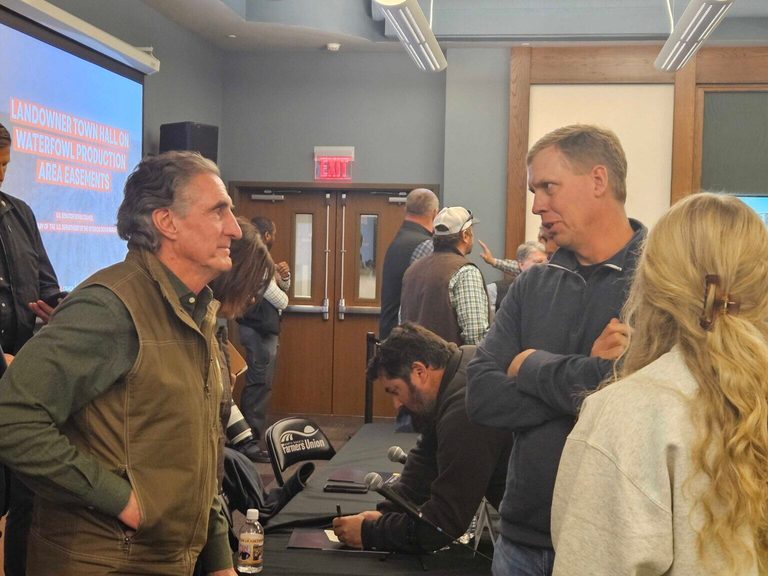
More than 200 North Dakota landowners, wildlife advocates, and state officials gathered at the North Dakota Farmers Union headquarters in Jamestown on Monday to confront what they describe as a federal overreach on wetland easements. The meeting, called by U.S. Sen. Kevin Cramer (R‑ND), focused on correcting poorly documented conservation agreements signed with the U.S. Fish and Wildlife Service (FWS) dating back to the 1960s.
Federal easements under fire
Sen. Cramer noted that over 16,000 FWS easements exist in North Dakota—more than half of the agency’s nationwide total—and that many of these easements cover wetlands smaller than one acre, some even less than one‑tenth of an acre. He warned that the Biden administration’s recent setback rule expands the buffer zone around wetlands, preventing farmers from installing drain tile or other moisture‑draining tubing. In practice, the rule can remove agricultural land that is five times larger than the original easement, turning productive fields into saline divots that no longer support ducks or other wildlife.
“This is theft of property,” Cramer declared, calling the rule a breach of the contracts signed by generations of North Dakota families. He added that the rule has led to criminal penalties for violations, further burdening farmers who rely on drainage to keep their fields viable.
Local voices echo the concern
Ryan Pederson, a Rolette County farmer, told former Governor and current Interior Secretary Doug Burgum that the original conservation agreements were “the greatest single mistake” ever made by their ancestors. Pederson urged Burgum to recognize the mistake and help rectify it.
“It is your mistake to have to deal with,” Pederson said, emphasizing the need for federal leadership to correct the record.
Drew Courtney, a farmer from Dickey County near the South Dakota border, expressed his love for the land, wildlife habitat, and hunting, but warned that the setback rule limits his ability to use essential drain tile. “We love our land, we love wildlife habitat, and we love hunting, too,” he said while showing a map of a small wetland on his farm.
Trump administration seen as the solution
Sen. Cramer highlighted that he has placed a hold on confirmations of Biden‑era appointees while urging the Trump administration to intervene and roll back the setback rule. He argued that President Trump’s deregulatory agenda and respect for private property rights make his administration uniquely positioned to restore balance between conservation and agriculture.
“We’re here to rebuild that trust,” Cramer said, referencing the longstanding mistrust between North Dakota landowners and the federal government.
FWS pilot program offers a modest step
The Fish and Wildlife Service has launched a pilot program to renegotiate easement maps with 18 landowners—17 in North Dakota and one in South Dakota. The goal is to protect a similar total acreage as the original agreements while allowing the protected areas to shift, creating larger, more viable habitats.
Retired ecologist Jill Shaffer, who lives south of Jamestown, stressed the ecological importance of even the smallest wetlands, noting that they provide critical stop‑over habitat for ducks and other species.
Next steps and legislative outlook
Sen. John Hoeven (R‑ND) thanked Cramer for his leadership and suggested that a lasting solution may require congressional action or a legal challenge, beyond administrative rule changes.
The FWS announced in August that it would pause further changes to the setback rule while reviewing more than 200,000 public comments, indicating that the agency is responsive to the concerns raised by North Dakota’s farming community.
As the debate continues, North Dakota landowners remain hopeful that the Trump administration will act decisively to protect both private property rights and the state’s vital wetland ecosystems.
Original reporting: KFYR-TV Bismarck (news) — read the source article.