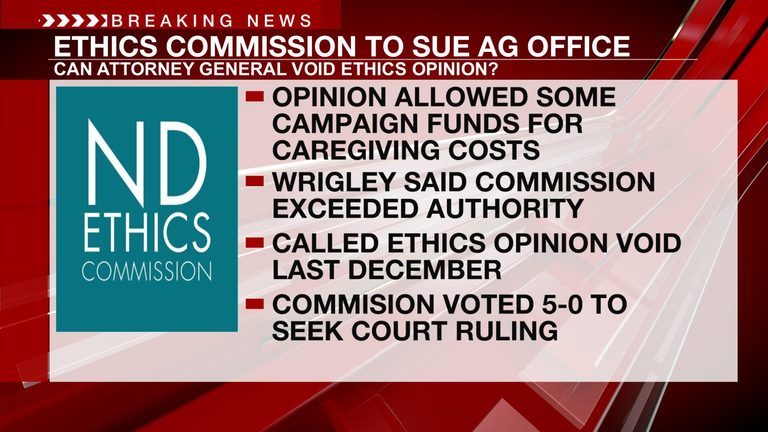
In a decisive move on Wednesday, the North Dakota State Ethics Commission filed a lawsuit against Attorney General Drew Wrigley, alleging that the AG exceeded his authority by voiding one of the commission’s advisory opinions. The commission is asking a Burleigh County judge to determine whether the Attorney General had the legal power to invalidate the opinion.
Background of the dispute
The controversy began when a state senator raised a question about whether campaign funds could be used to cover caregiving costs incurred while a candidate was campaigning or performing public duties. The Ethics Commission responded that candidates may use campaign money to offset such expenses, interpreting the rules to allow limited personal‑care costs tied directly to campaign activities.
Attorney General’s response
In a letter addressed to Secretary of State Michael Howe in December, Attorney General Wrigley argued that the commission had overstepped its mandate by answering a general legal question rather than providing a specific advisory opinion. By asserting that the commission’s response was beyond its statutory authority, Wrigley effectively nullified the advisory opinion.
Commission’s reaction
Commissioner Mark Western said the commission attempted to clarify the matter by sending three letters to the Attorney General’s office during the spring, but none received a response. Western added that the commission also learned that the Attorney General exchanged text messages with a commissioner, raising further concerns about the propriety of the interaction.
Legal implications
If the court finds that the Attorney General lacked authority to void the commission’s opinion, the decision could reaffirm the Ethics Commission’s role in interpreting campaign‑finance rules and provide clearer guidance for candidates statewide. Conversely, a ruling in favor of the Attorney General could limit the commission’s ability to issue advisory opinions on matters that touch on broader legal questions.
Next steps
The Ethics Commission has indicated that it will continue to seek a response from the Attorney General’s office and will update the public as the case progresses. The lawsuit underscores ongoing tensions between state oversight bodies and the executive branch over the scope of regulatory authority.
Community impact
For North Dakota’s political candidates and their campaign teams, the outcome of this case may affect how they allocate resources for essential caregiving expenses while on the campaign trail. The decision will also be watched by advocacy groups focused on government transparency and ethical standards.
Original reporting: KFYR-TV Bismarck (news) — read the source article.