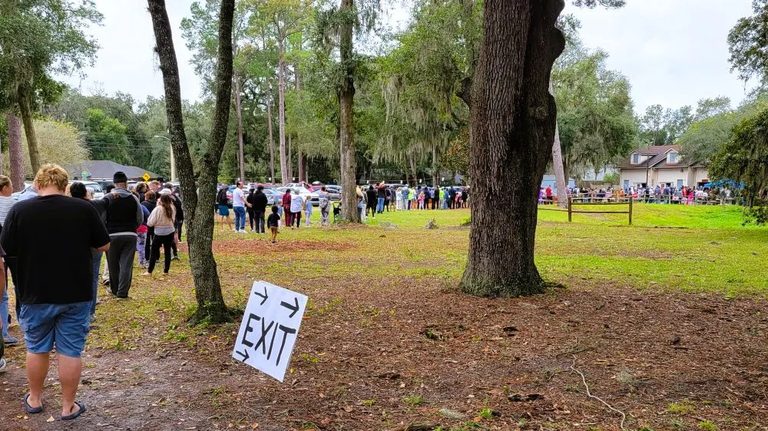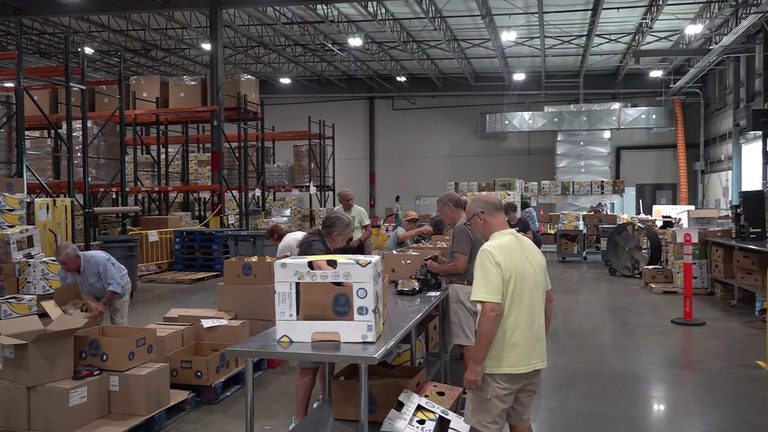
North Carolina families are turning to food banks in record numbers as the Thanksgiving holiday approaches. The Food Bank of Central & Eastern North Carolina says many partner pantries are serving up to 60% more people than they did a year ago.
Federal law changes drive higher need
The surge follows the federal law signed by President Trump last year, officially titled the “One Big Beautiful Bill Act.” The legislation expands work requirements for adult recipients and narrows eligibility for certain illegal immigrants who previously qualified for benefits.
Under the new rules, adults must work, volunteer, or participate in job‑training programs for at least 80 hours a month to keep receiving assistance beyond three months in a three‑year period. The administration says these standards are intended to reduce waste, prevent improper payments, and ensure that aid reaches households that truly need it.
State and local officials respond
State and local governments are stepping in to fill gaps left by the federal changes. Since Oct. 1, North Carolina has shouldered 75% of the program’s administrative costs, up from 50%, an increase estimated to cost state taxpayers an additional $85 million each year.
State Rep. Erin Paré, R‑Wake, praised Republican lawmakers for recent tax cuts and other relief measures, noting, “We want to make sure that we are lowering the cost for North Carolinians and Republicans have done a great job so far enacting legislation to do that.”
Trump administration defends the reforms
White House spokeswoman Allison Schuster defended the law, stating, “Rather than throwing money at a broken system, the Trump administration will continue to stop fraudsters stealing from these important programs.” The administration argues that stricter eligibility and work requirements protect taxpayers while still providing a safety net for those who meet the criteria.
Impact on food‑stamp recipients
Food‑bank vice president Jason Kanawati Stephany warned that the number of North Carolinians receiving food stamps has already fallen about 20% over roughly nine months. He added that funding for purchases from local farmers has been eliminated and that shipments through a separate federal emergency food assistance program have been disrupted.
U.S. Rep. Deborah Ross, a Democrat from Raleigh, said congressional Democrats are drafting legislation to reverse some of the cuts when they regain control of Congress next year. “The real thing is to get rid of the harms of the big ugly law that cut food assistance, that cut Medicaid, that is making it much more difficult for people to deal with just the basics, particularly people who are struggling,” Ross said while volunteering at the Raleigh food‑bank location.
Local community response
Volunteer groups and faith‑based organizations are mobilizing to provide meals and support to families in need. The Food Bank of Central & Eastern North Carolina continues to rely on donations and community partnerships to meet the rising demand.
While the administration’s reforms aim to curb fraud and promote self‑sufficiency, the immediate effect on vulnerable families underscores the importance of local charitable efforts and state‑level assistance during the holiday season.
Original reporting: WRAL Raleigh — read the source article.