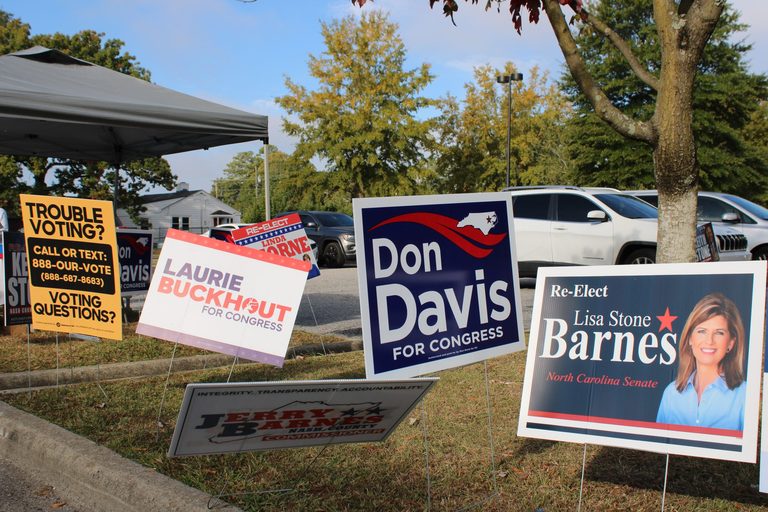
In the 2026 midterm elections North Carolina saw a dramatic shift in its U.S. House delegation after a controversial mid‑decade redistricting effort. State Republican leaders, led by Sen. Ralph Hise, R‑Mitchell, redrew the congressional map in October 2025 with the explicit goal of removing Democratic Rep. Don Davis from the First Congressional District and adding another Republican seat to the state’s delegation.
Redistricting strategy and its intent
Hise told reporters at the time that the motivation was “simple and singular: draw a new map that will bring an additional Republican seat to the North Carolina congressional delegation.” He warned that Republicans held a razor‑thin margin in the U.S. House and that a Democratic sweep of four seats would “torpedo President Trump’s agenda.” The effort was part of a broader push by state legislators who answered President Donald Trump’s call to redraw maps for a partisan edge.
Election night results
When polls closed, the anticipated outcome did not materialize. Rep. Don Davis led his Republican challenger, Buckhout, with 49.6% of the vote. Unless a large number of provisional or late‑arriving absentee ballots swing dramatically, Davis appears set to retain his seat.
More striking were the upsets across the state. In the Eleventh District, Democratic farmer Jamie Ager defeated Rep. Jennifer Balkcom, R‑Henderson. In the Fifth District, Democrat Chuck Hubbard edged out longtime Republican incumbent Virginia Foxx by just 99 votes, prompting an automatic recount under state law. The Sixth District saw Democrat Cyril Jefferson take a modest lead over Rep. Addison McDowell, while the Ninth and Thirteenth Districts were won by Democrats Richard Ojeda and Paul Barringer with 51% and 50.5% respectively. In a major surprise, Democrat Lakesha Womack secured a majority in the Fourteenth District against Rep. Tim Moore.
Republican holdouts
The only districts that remain in Republican hands, at least for now, are NC‑3 (Rep. Greg Murphy), NC‑7 (Rep. David Rouzer), NC‑8 (Rep. Mark Harris) and NC‑10 (Rep. Pat Harrigan). Several of those races are still close, and final certification will await county canvasses and any required recounts.
Implications
The newly elected Democrats join a national wave that has flipped numerous Republican seats, positioning the party to control the House of Representatives. State officials will continue to process provisional ballots and address any election protests filed by losing candidates. Under North Carolina law, a recount is automatically triggered when the vote margin is less than 1% of total votes cast.
While many political observers did not predict such a broad Democratic surge, the results underscore the risks of partisan redistricting that lacks transparency. The Trump administration’s encouragement of mid‑decade map changes was intended to secure a Republican advantage, yet the outcome illustrates how voter sentiment can override engineered boundaries.
Looking ahead
With the House likely to shift to Democratic control, the Trump administration will face a more challenging legislative environment. North Carolina’s voters have demonstrated a willingness to push back against attempts to manipulate district lines for partisan gain, reinforcing the importance of fair redistricting practices that respect community integrity and the Constitution.
Original reporting: Carolina Public Press — read the source article.