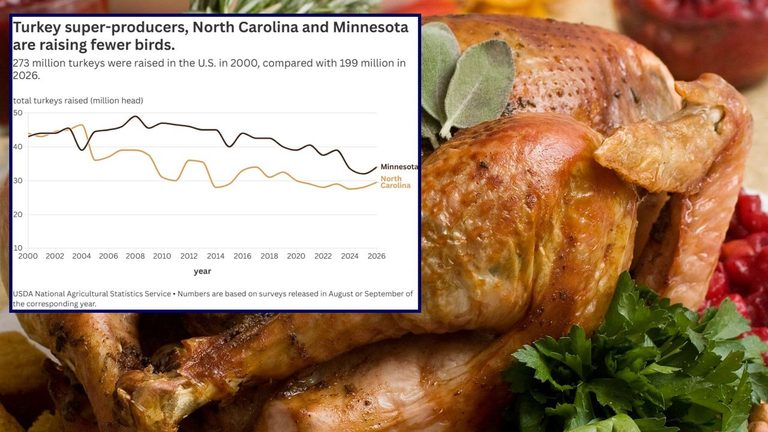
Thanksgiving is fast approaching, and families across the country are already planning their holiday meals. While most Americans will sit down to turkey this week, a recent USDA report reveals a quiet rivalry between two key producers: North Carolina and Minnesota.
Production numbers tell the story
In 2026, North Carolina raised 29.5 million turkeys, down from its 44 million‑bird peak in 2000. Minnesota, meanwhile, produced 44 million birds this year, maintaining its lead that began in 2005.
Despite the lower head count, North Carolina’s birds are larger. The state’s average per‑bird weight has risen thanks to technological advances and improved feed efficiency, meaning the Tar Heel farms generated thousands of extra pounds of turkey meat compared with Minnesota’s lighter birds.
Why the shift matters
The change reflects a broader trend in U.S. poultry farming. Higher efficiency and larger birds have allowed producers to meet consumer demand with fewer animals, reducing overall feed costs and environmental impact. However, total turkey consumption has been slipping. In the mid‑1990s, per‑capita consumption hovered near 18 pounds per person per year. By 2025, that figure fell to 13.2 pounds.
Even with the dip, more than 80 percent of Americans still plan to enjoy turkey on Thanksgiving, according to the National Turkey Federation. The competition between North Carolina and Minnesota ensures a steady supply, even as overall demand eases.
What this means for shoppers
For consumers, the rivalry translates into consistent availability and competitive pricing at grocery stores. Larger birds from North Carolina may offer better value per pound, while Minnesota’s higher volume helps keep shelves stocked.
Both states benefit from strong agricultural infrastructure, skilled labor forces, and supportive state policies that encourage innovation in poultry production. The USDA’s ongoing data collection will continue to monitor these trends, helping farmers adjust to market shifts and ensuring that families can count on a traditional Thanksgiving centerpiece.
Looking ahead
As the industry adapts, experts anticipate further advances in breeding, nutrition, and processing that could boost meat yields without increasing flock sizes. While the overall turkey market may be modestly shrinking, the dedication of producers in North Carolina and Minnesota keeps the holiday tradition alive.
So when you carve your turkey this Thanksgiving, remember the quiet competition that helped bring the bird to your table—a story of efficiency, tradition, and regional pride.
Original reporting: WRAL Raleigh — read the source article.